Kannauj: The Town That Bottled Every Smell
We’ve all had those strange moments of catching a whiff of petrol, smelling kerosene or standing outside right after the first rain, wishing that smell of wet earth would stay a little longer.
But what if someone actually turned them into a bottled reality?
There is one quiet town in India that did exactly that, using nothing more than fire, copper, and patience.
The Rise of a Perfume Town
Kannauj was not always known for fragrance. Long before it became a leading name in the perfume market, it was home to grand courts and ambitious kings. Somewhere between those centuries of politics and war, its people found something else worth building a legacy around.
As per popular stories, it all started in the golden age under the Mughals, when emperors treated fragrance as seriously as they treated jewels. One such story claims that rose attar itself was found by accident, when someone noticed rose petals floating in bathwater had left behind an oil unlike anything smelled before. Whether it is true or not, the story stuck, and Kannauj built an entire industry around it.

But a good story does not keep a business alive for a thousand years. Something else had to be happening behind those doors, generation after generation.
How a Royal Hobby Turned Into an Industry
Once the royal empires faded, the families who had once perfumed those very palaces did not stop working. They simply moved the craft into their own homes.
Fathers taught sons the exact temperature at which a fire should burn. Sons learned to recognise the moment a batch was ready purely by smell. None of it was written down anywhere. It passed quietly from one pair of hands to the next, until the whole town started running on it.
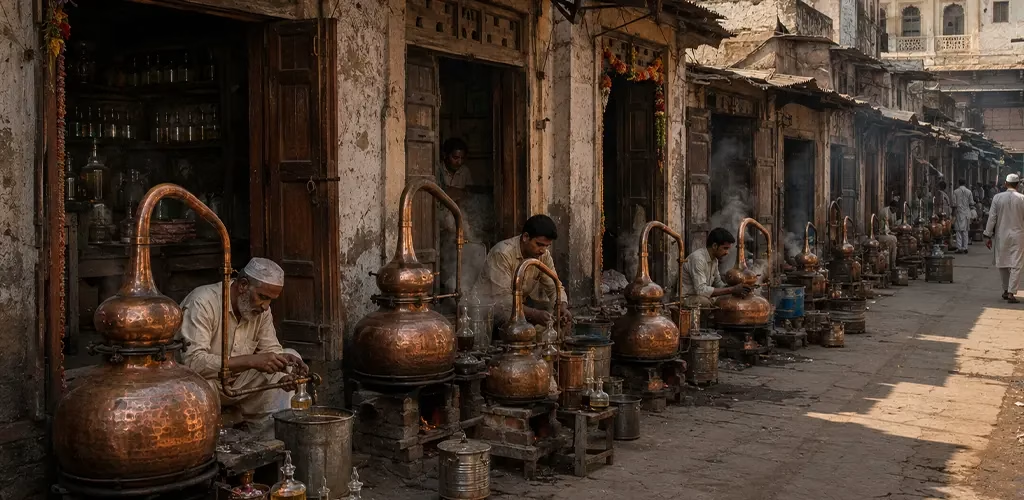
At its peak, Kannauj had around seven hundred small distilleries working side by side. What began as a handful of royal recipes had become businesses for hundreds of families, each holding onto its own version of the craft.
Why It Is Still Completely Natural Today
But what makes Kannauj rare is that while most perfumes today are mixed in labs using alcohol and synthetic compounds, Kannauj never switched over.
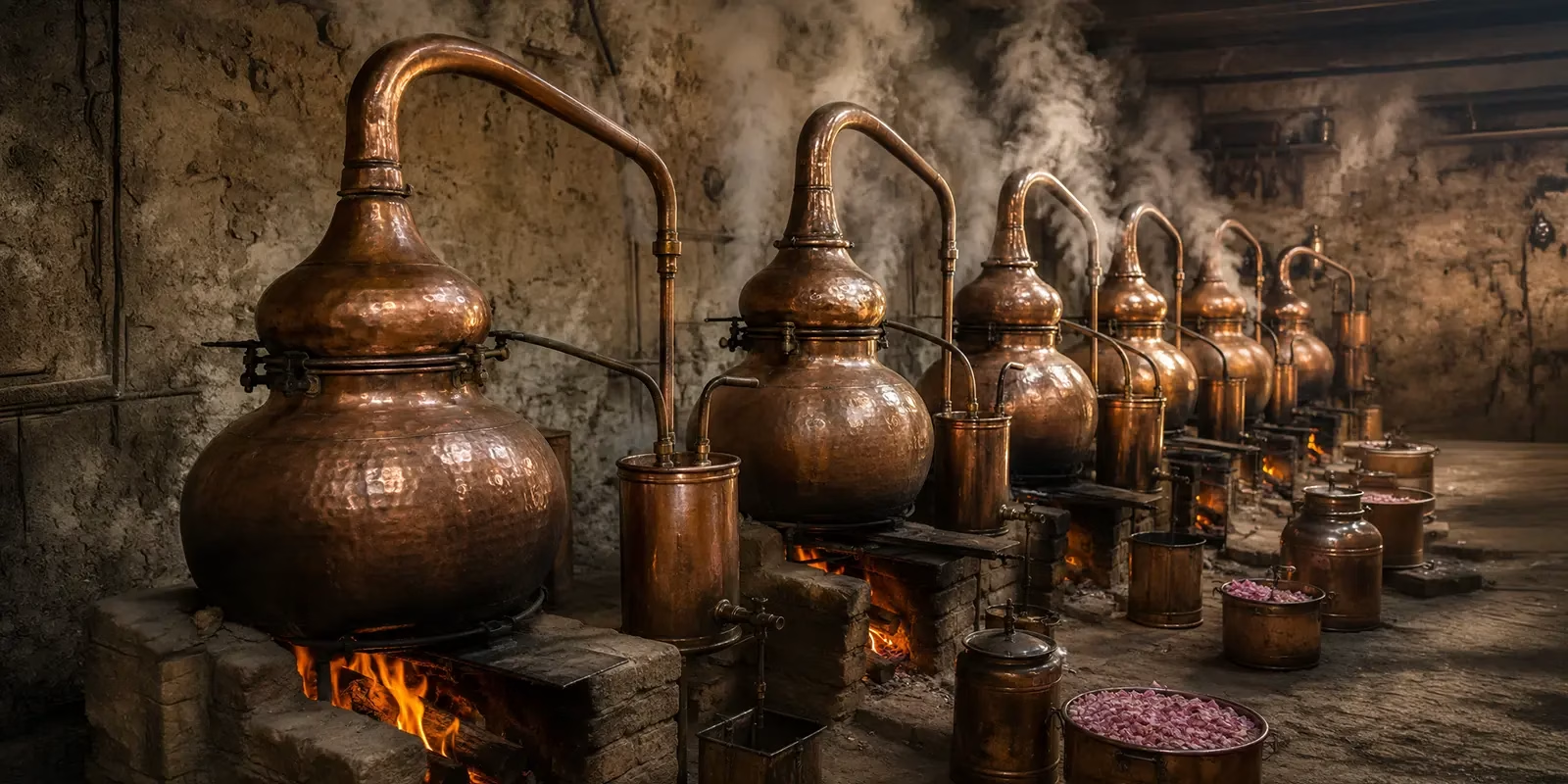
The process still runs on copper containers called degs, sitting over open wood fires, connected through bamboo pipes to cooling pots called bhapkas. As steam travels through the pipe and turns back into liquid, it slowly settles into a base oil, usually sandalwood. No alcohol touches the mixture at any stage.
A single batch can take days to finish, and there is no machine to hasten it. The final oil holds onto skin for hours, not minutes, only because nothing artificial was ever added to it.
The Smells That Made Kannauj Famous
Mitti Attar
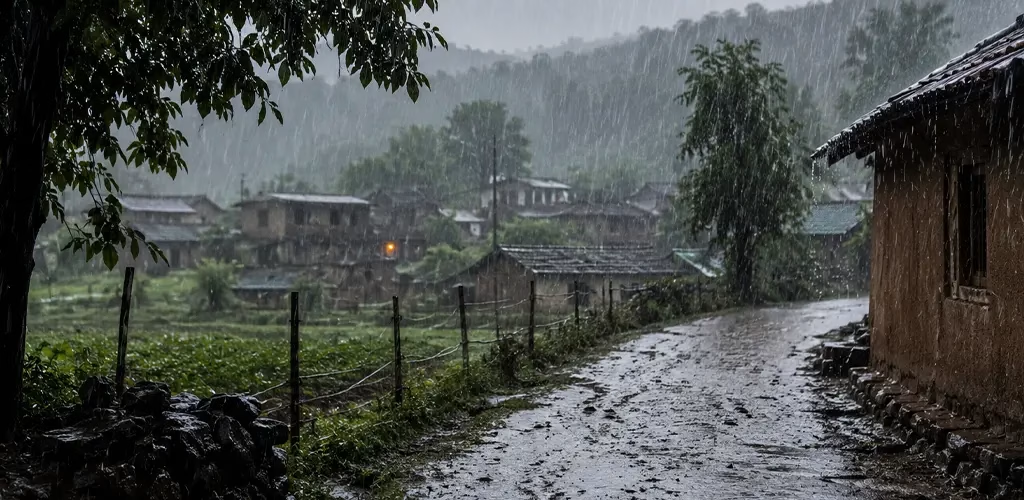
What if the smell of rain itself could be sold in a bottle?
In Kannauj, workers made it possible through a scent called mitti attar. They bake clay, break it down, and distil it with water until the exact scent of wet earth gets trapped inside oil.
Shamama
There is one bottle of fragrance holding an entire season inside it: Shamama. It blends more than forty flowers, herbs, and resins, aged together for months before it is ready.
Ruh Khus
Long before air conditioning, Kannauj already had an answer to Indian heat. Drawn from khus grass roots, it carries a cool, earthy freshness once used to survive the harshest summers.
Why Kannauj Still Smells Different
From the smell of wet earth to the chill of khus, Kannauj has found a way to bottle scents that are difficult to forget.
But what makes these fragrances special is not just what goes into the bottle. It is the slow craft behind them, passed from one generation to the next.
Perhaps that is why, after centuries of change, this small town by the Ganga still carries the title of India’s perfume capital.