The Strange Connection between Manipur and Lord Krishna
Far from the famous temple towns of Mathura and Vrindavan, an art form exists due to an almost magical, miraculous reason.
Not a tradition passed down through generations, not a story taken from a holy book, and not even a myth widely believed. But a king’s own dream, night after night, that led to the inevitable birth of the art form.
The king was Bhagyachandra of Manipur. And the dream, he said, was of Lord Krishna himself.
Today, as India celebrates Janmashtami, few people outside Manipur know how closely the state’s history is tied to Lord Krishna’s life – not as a god watched from far away, but as someone the Manipuri people believe once walked, danced and showed himself among them.
A King Dream That Changed Manipur
In the late 1700s, Manipur was a kingdom in trouble. Bhagyachandra had been pushed out during a war with the Burmese and was living away from home in Assam, with no throne and no clear future.
It was during this hard time, the story says, that Lord Krishna began coming in his dreams.
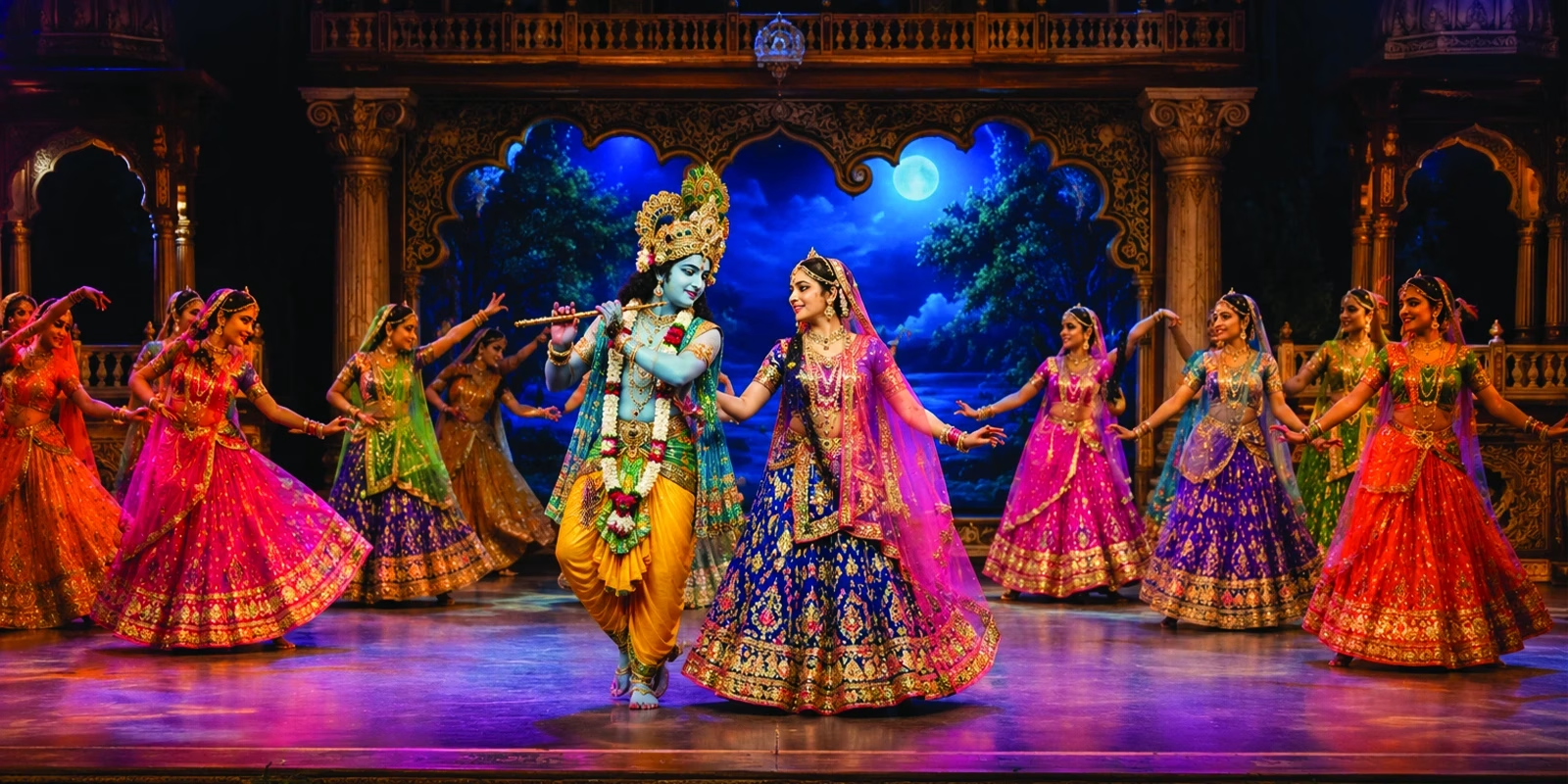
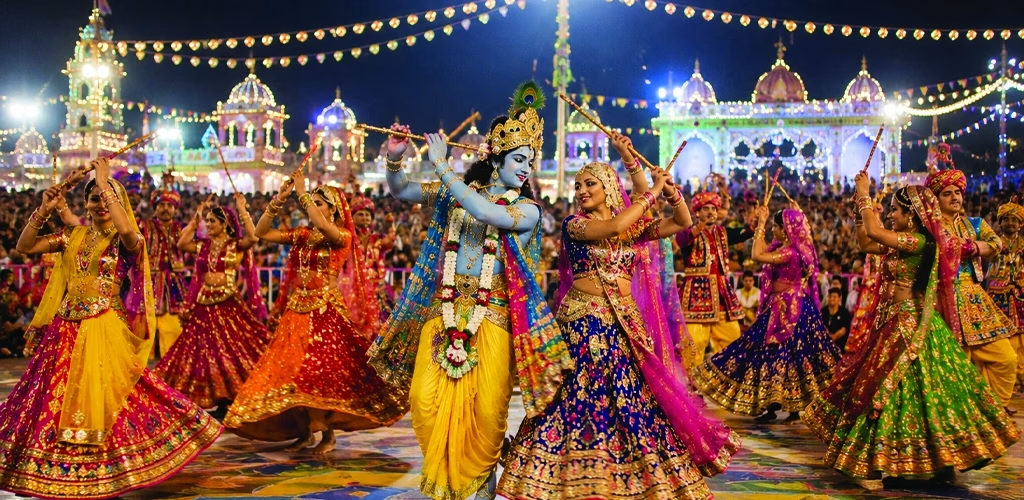
He did not appear as a baby or a warrior, but as Natabar – the dancing god, dressed in soft, flowing clothes, holding a flute, with a crown of peacock feathers on his head.
In the same dream, the king saw Lord Krishna together with Radha, and he was told to carve their idols out of wood from a jackfruit tree that grew on the Kaina hills.
For a king busy trying to win back his kingdom, it was a strange thing to be told. But Bhagyachandra did not brush it aside.
Shree Govindaji Temple: From a Dream to a Temple
When Bhagyachandra finally got his kingdom back, he set out to do what he had seen in his dream.
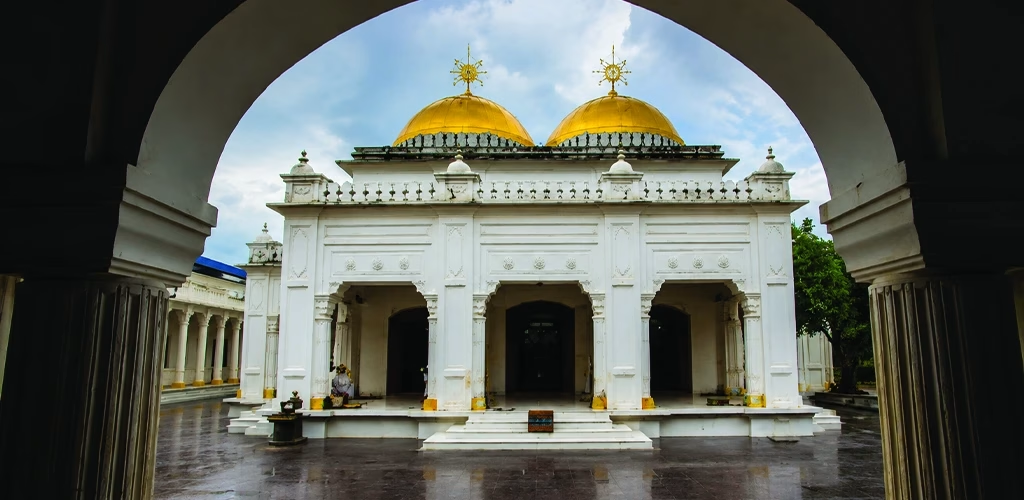
He had the idols carved just as he remembered them and, in 1776, placed them inside the Shree Govindaji Temple, built right within his own palace.
Lord Govindaji – Krishna in his gentlest, most loving form – became Manipur’s own god. Not just worshipped from a distance, but taken in as one of the kingdom’s own.
But an idol alone did not feel like enough. The king wanted his people to see Lord Krishna the way he had seen him – dancing, alive, surrounded by his devotees.
When the Palace Became Vrindavan
On a full moon night in November 1779, Manipur saw something it had never seen before.
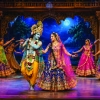
The king’s own daughter, Bimbavati, came forward dressed as Radha. Around her, women of the palace became the Gopis, pulled once again into Lord Krishna’s timeless dance. The king himself sat with the drums, keeping the beat for a dance he had carried out of a dream and into real life.
This was the first Maharaas – the start of what the world now knows as Manipuri Raas Leela.
Every step, every fold in the costume, every turn of the hand was said to match exactly what Bhagyachandra had seen in his dream. None of it was made up for show. It was devotion, turned into movement.
Raas Leela: More Than a Dance Form
It would be easy to see Raas Leela today as just one of India’s eight classical dance forms – and it is that too, graceful and hard to master, with a style all its own.
But in Manipur, it was never meant to just be watched.
The dance tells the story of Lord Krishna’s Raas with the Gopis of Vrindavan – the flute that calls them out of their homes, the circle they form around him under the moon, a love that asks for nothing back. For the Meitei Vaishnavites who perform it, no Raas is just an act. Many believe that Lord Krishna truly comes down again to dance with his devotees.
That belief is why, even now, the tradition has barely changed – passed on through the royal family, temple schools and generations of dancers who treat every show as worship first, and art second.
Manipur's Krishna, Still Dancing
Every year, with Janmashtami arrives a celebration in the Govindaji Temple in Imphal. The halls get filled with the same love that once brought Bhagyachandra’s dream to life. Lamps are lit, songs are sung, and somewhere in the crowd, a dancer dressed as Lord Krishna begins to move.
It is a reminder that Krishna worship in India was never just one story told one way. In Manipur, it began with a king’s dream, was shaped by a young princess’s devotion, and lived through war, exile and time to become a tradition that is still alive today – the flute still plays, and the circle still forms.
And somewhere in Manipur, on a full moon night, Lord Krishna is still believed to be dancing.