Nanda Devi Raj Jat Yatra: The Walk That Bids Farewell to a Daughter
We’ve all stood at a station or an airport, waving off someone we love, wishing the goodbye could have lasted just a little longer.
Now imagine an entire region doing that together and for a person they all call their own aughter. This happens not once, but every 12 years, walking together for close to three weeks across the toughest ground the Himalayas can offer.
This is the Nanda Devi Raj Jat Yatra, and it might be one of the most emotional journeys anywhere in India.
A Daughter Going Back to Her Husband's Home
In the hills of Garhwal and Kumaon, Nanda Devi is not just a goddess. She is spoken of the way people speak of a daughter of the house, someone born of the mountains, married off to Lord Shiva, and now living far away in his home in the high Himalayas.
Every 12 years, the people of this region come together to send her off once more. It is treated less like a religious event and more like a family sending away a bride, with the same mix of pride, grief, and love that comes with any farewell like that.
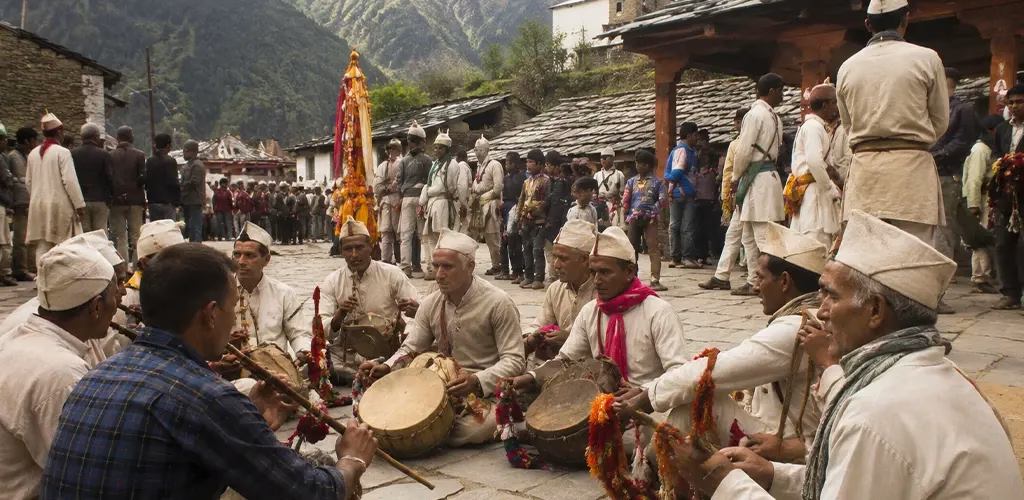
The Yatra begins from Nauti village near Karnaprayag in Chamoli district, and stretches close to 280 kilometres, ending at a remote, high-altitude spot called Homkund. Along the way, it passes through dense forests, wide alpine meadows, and glacier country, ground most trekkers would think twice about attempting, that too while carrying the weight of a goodbye on their shoulders.
The Ram That Leads the Way
At the heart of this journey walks a four-horned ram, known locally as the Chausingha Khadu.
This is not a ram that gets picked out of a herd. According to local belief, it simply appears in a village somewhere in the region when the time for the Yatra draws near, as if the goddess herself has chosen her own guide. It carries her symbolic belongings on its back and leads the procession, needing no rope, no one pulling it forward.
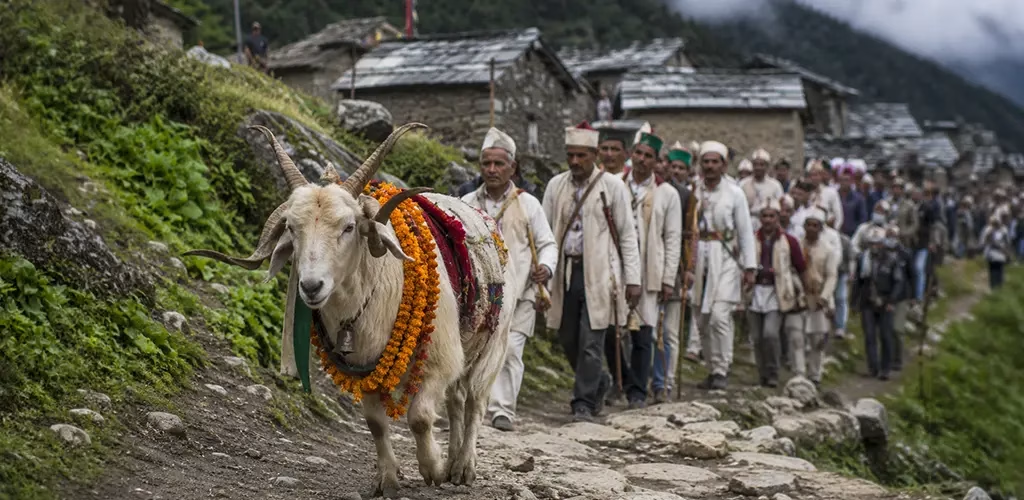
For the people walking behind it, the ram is not just an animal. It becomes something closer to a living sign that they are on the right path.
The Long Walk Through the Mountains
Day after day, the procession moves higher, through villages, river crossings, and meadows that turn cold and thin on air the further they go.
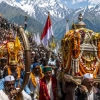
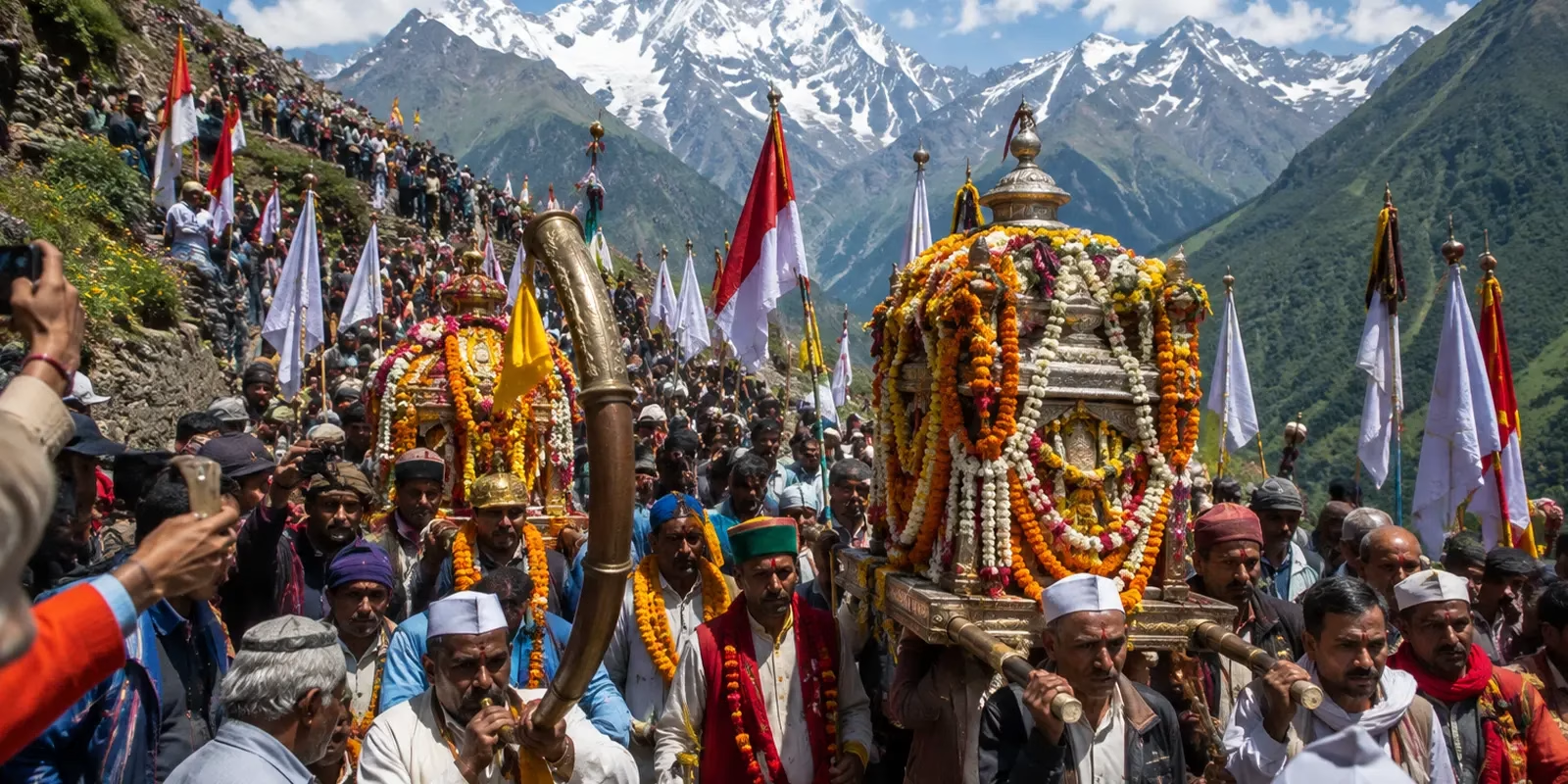
Pilgrims carry decorated umbrellas called chhatolis, meant to represent the goddess herself, and sing old folk songs passed down through generations as they walk. There is no rush in this journey. Every stop along the route has its own story and its own small temple, a reason to pause and pray before moving on.
By the time the group is somewhere near Homkund, at close to 5,500 metres, the crowd gets considerably smaller. Only the most determined make it this far, walking through what is easily one of the most physically demanding stretches of any pilgrimage in the country.
The Goodbye at Homkund
At Homkund, the final rituals are carried out, prayers are offered, and then comes the moment the entire Yatra has been building towards.
The four-horned ram is released into the wild, walking off alone into the mountains, never to be seen again by the pilgrims who followed it all this way. In that one quiet moment, the goddess is believed to finally reach her husband’s home, and the Yatra reaches its true, tearful ending.
Pilgrims often describe this as one of the hardest moments, with grown men and women crying like a family saying goodbye to a daughter leaving home. After 280 kilometres of walking together, the goodbye simply arrives on its own.
That is what makes the Nanda Devi Raj Jat so different. It does not ask anyone to witness a miracle. It only asks them to walk a daughter home, one last time, before letting her go.