The Village in Punjab That Became a Tank Graveyard
There is an uncomfortable silence that settles over a battlefield once the guns finally stop – the silence of men who did not expect to walk away, but somehow did. This exact silence fell over the fields of Punjab in 1965, broken only by the sound of abandoned tanks slowly sinking into the mud.
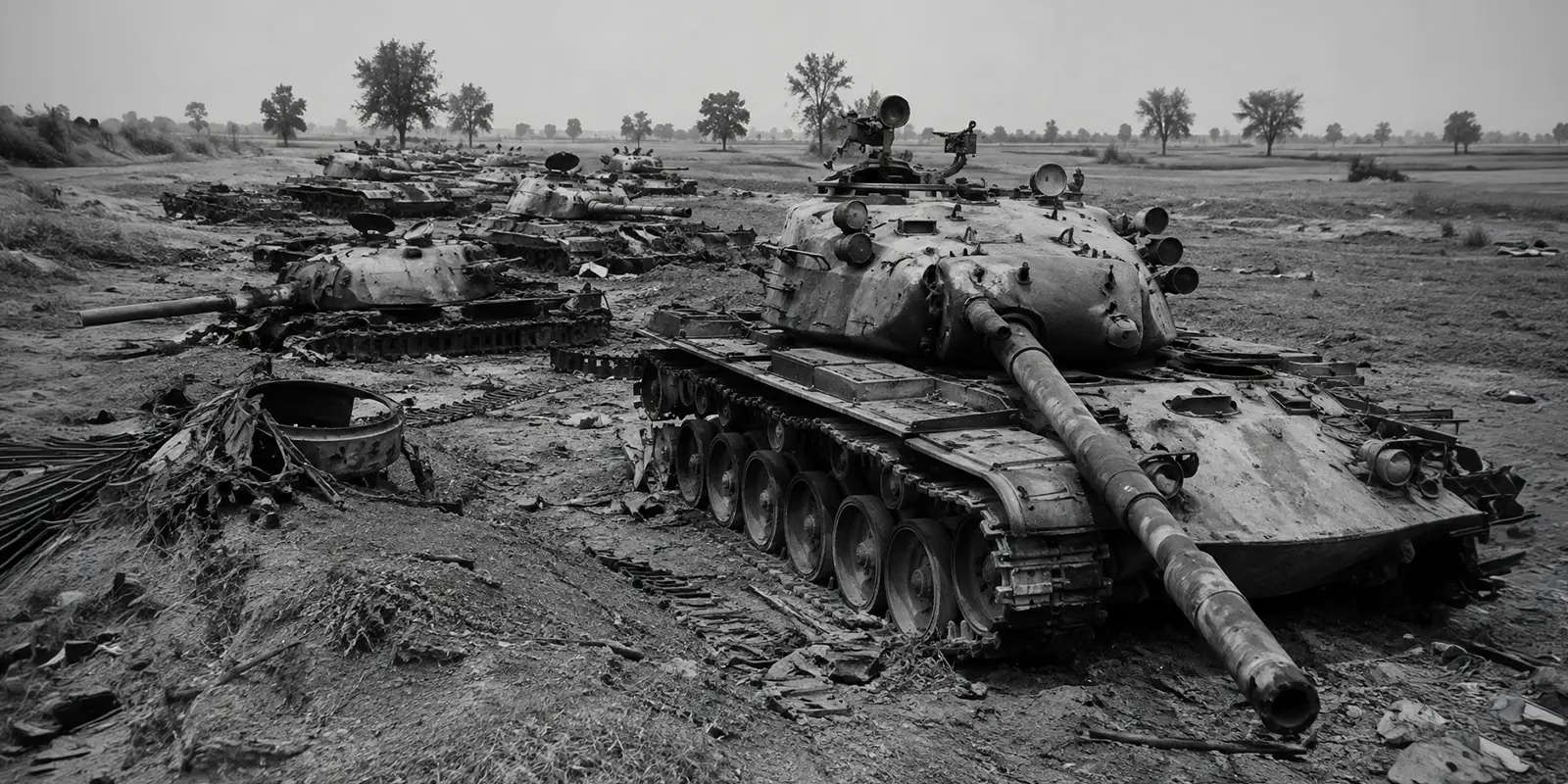
Only a few days after these fields were filled with tall sugarcane, Punjab’s farmland was covered with Pakistan’s feared Patton tanks, stuck in the mud and destroyed.
This is the story of the Battle of Asal Uttar – a three-day war in the heart of Punjab that broke Pakistan’s finest armoured division and left behind the name: “Patton Nagar,” the graveyard of Patton tanks.
When Punjab's Soil Became the Frontline
It was September 1965 – war between India and Pakistan was raging across the western border, with Punjab right in the middle of all the heat.
Pakistan had an ambitious plan of sending its newly acquired American M-47 and M-48 Patton tanks into Punjab. These were some of the most advanced tanks of that time, and stopping them was almost considered impossible.
The Pakistani 1st Armoured Division, supported by the 11th Infantry Division, crossed into Punjab and captured the border town of Khem Karan, moving further towards Amritsar.
For India, things looked difficult. Its own tanks, including ageing American Shermans, French AMX-13s and British Centurions, were outgunned, outnumbered, and years behind the Patton in firepower and mobility. On paper, Pakistan had every advantage, and this part of Punjab looked likely to fall.
But a battlefield is rarely decided on paper.
In Punjab, the mud, sugarcane fields and the determination of Indian soldiers soon changed the course of the battle.
The Trap Laid in Punjab's Sugarcane Fields
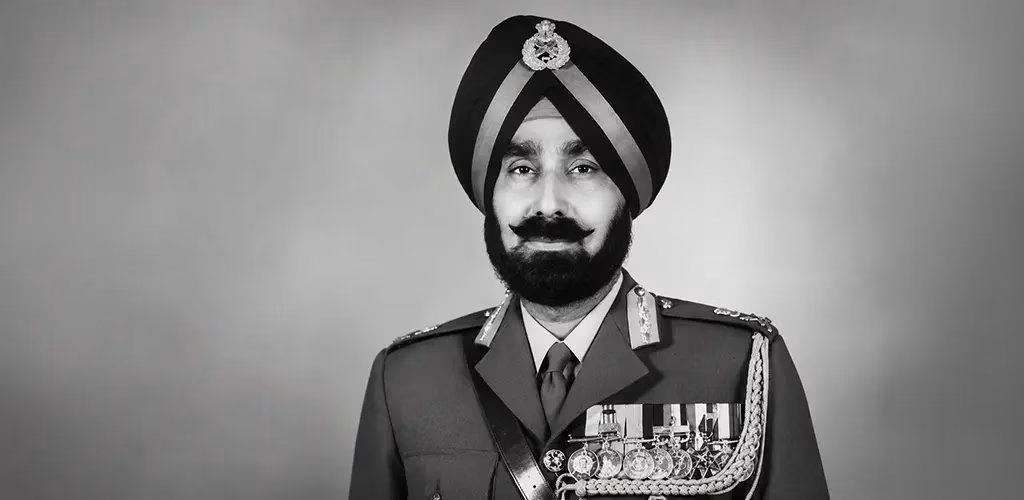
Major General Gurbaksh Singh, who commanded India’s 4th Mountain Division, made a decision that would shape the battle at Asal Uttar.
Instead of taking on the Patton tanks directly, Indian troops fell back and positioned themselves in a horseshoe around the village of Asal Uttar, leaving the open end towards the advancing Pakistani forces.
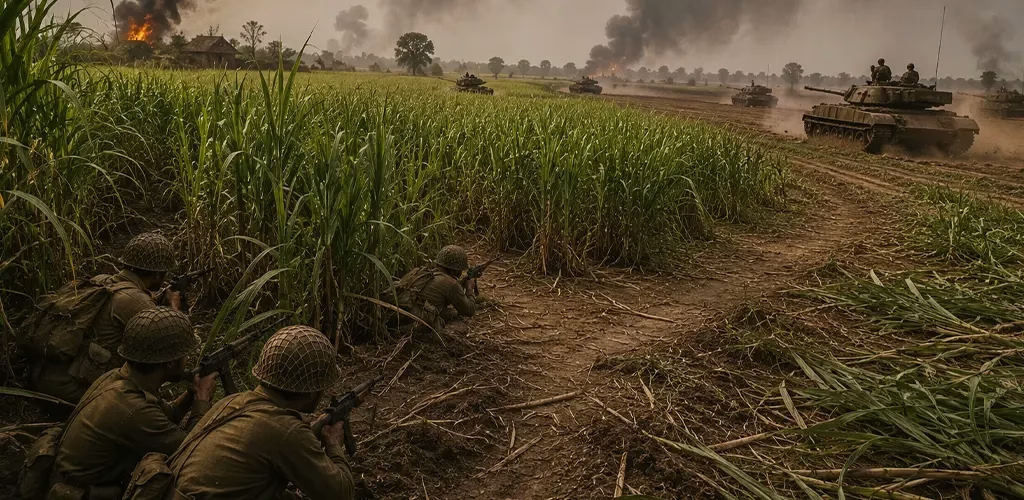
That night, Indian soldiers flooded the fields around the village, turning the hard Punjab soil into deep, sticky mud. The tall sugarcane gave them another advantage. Hidden among the crops, Indian tanks and soldiers waited as the Pakistani armoured columns moved straight towards them.
By the next morning, the Pattons were struggling to move. Their tracks sank into the wet earth, leaving them exposed to Indian gunners hidden in the sugarcane. One after another, the tanks were hit.
What followed became one of the biggest tank battles since the Second World War, fought not on some distant battlefield, but across the flooded fields of Punjab.
A Rout That Reshaped the War
By the time the war came to an end, the losses spoke for themselves.
Pakistan lost dozens of tanks, either destroyed, abandoned or captured during the battle. Most of them were Pattons, the very tanks that had been considered almost impossible to stop.
India’s own losses were a fraction of that. Pakistan also lost its commanding officer in the sector, Major General Nasir Ahmed Khan, and two of its armoured regiments were effectively wiped out on Punjab soil.
The battle went on to be remembered as one of the most important tank battles of the twentieth century, often compared in scale to the Battle of Kursk in World War II. What began as a confident Pakistani advance ended in retreat, and the setback in Punjab seriously weakened Pakistan’s armoured campaign for the rest of the 1965 war.
Birth of Patton Nagar: A Graveyard as a Monument
In the days that followed, the Indian Army gathered the wreckage, bringing dozens of captured and destroyed Patton tanks near the village of Bhikhiwind, close to Khem Karan in Punjab.
Soon, soldiers and curious visitors were walking among the huge, abandoned machines that had once been feared across the subcontinent.
The locals gave the place a name that stuck: Patton Nagar, or “Patton City”. What stood there was a graveyard of tanks that had come promising victory, but ended up as symbols of defeat.
Even today, it remains one of the most striking reminders of Punjab’s wartime past, and of how quickly the tide of a battle can turn.
Patton Nagar and Tanks That Can Never Move
Six decades on, the fields around Asal Uttar have returned to their quiet rhythm of sugarcane and farming. But the soil of Punjab still carries the memory of what happened there in September 1965.
Every year, the Indian Army pays tribute to the soldiers who fought and fell defending this part of Punjab, a battle that proved technology alone cannot win a war – terrain, tactics, and courage often matter just as much.
Perhaps Patton Nagar’s greatest story is not of tanks that fell, but of the soldiers who refused to give ground.