
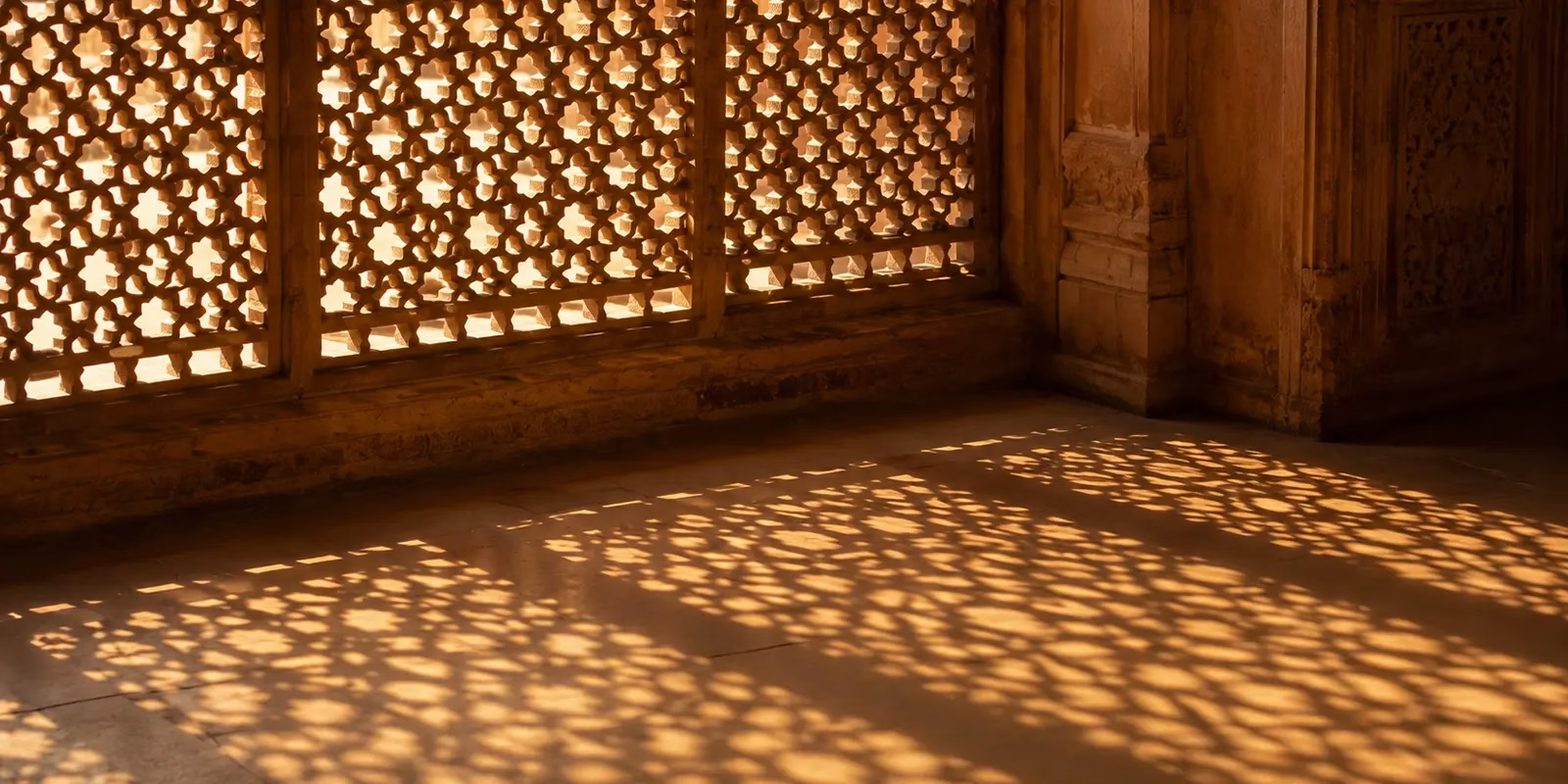
When India Used Jaalis to Cool Homes
Imagine a scorching summer day, the power goes out, and there’s no AC or fan to turn back on.
Sounds unbearable, right?
But centuries ago, Indian builders never had to worry about that problem in the first place. They never had an AC to lose, so they built the cooling straight into the wall itself, using a simple stone screen full of small holes.
Today we call it a jaali, and it is still one of the smartest cooling ideas ever built into a building.
What Exactly Is a Jaali
A jaali is a stone or wood screen with a pattern of small holes cut all the way through it. It looks like a simple decoration- flowers, stars, or geometric shapes carved into a wall or window from a distance.
But every hole in that pattern has a job to do.

As outside air pushes through the narrow gaps, it speeds up and cools down slightly before it reaches the room. The same screen also blocks direct sunlight while still letting in enough light to see by.
No glass, no motor, just carved stone doing the work of both a fan and a curtain.
The Cooling Trick Hidden in the Walls
Long before electricity, Indian summers were still brutally hot, and builders had to find a way to live with that heat, not fight it.
Palaces, forts, and havelis across Rajasthan and North India used jaalis on almost every window and balcony. The Hawa Mahal in Jaipur is probably the most famous example, its entire front wall built almost completely out of small jaali windows, letting in a constant breeze even on the stillest day.

But cooling was not the only reason jaalis found their way into royal buildings.
For royal women, these stone screens offered something else too: a way to see outside without being seen.
Sitting behind a jaali screen, they could watch street life, festivals, and processions below without being seen themselves. So a jaali was doing three jobs at once: cooling a room, letting in light, and offering privacy, all without a single moving part.
The Simple Science Behind the Cooling
There is nothing magical about a jaali, just good physics.
When wind hits a solid wall, it has nowhere to go, and heat simply builds up on the surface. But when that same wind hits hundreds of small holes, it gets forced through narrow gaps, speeding up as it passes through. This is the same idea behind a fan blade or a nozzle, just built into a wall instead of a machine.
The tighter and smaller the holes, the stronger this effect becomes. That is why old builders spent so much time perfecting the pattern, not just for looks, but because the exact size and spacing of each hole decided how cool a room would actually feel.
The Cooling System We Almost Forgot
Modern buildings run almost entirely on air conditioners, machines that cool a room by using a lot of power and letting hot air out somewhere else.
Jaalis never needed any of that. They cooled a room using nothing but wind, shade, and a well cut pattern in stone. As cities look for ways to cut down on power use, architects are once again turning back to this old idea, adding modern jaali style screens to new buildings.
It turns out the coolest rooms in India were never the ones that needed an AC in the first place. They were the ones with the smartest wall.