Kerala's Literacy Story: The Revolution That Happened Outside Classrooms
We’ve all watched an elderly person hand over a letter, a form, or a phone message to someone younger, just to have it read out loud to them.
In most parts of the world, this is still common, but in Kerala, it barely happens at all.
Kerala has one of the highest literacy rates in India, but the classroom was not where this story was won. Much of it happened in small reading rooms and through door-to-door campaigns that most people have never heard of.
A State That Started With a Library, Not a School
Long before literacy became an aspiration for the government , Kerala already had a habit of reading.
In 1945, a young man named P N Panicker brought together a handful of scattered village libraries into one network, the Thiruvitamkoor Grandhasala Sangham. What began with a few dozen reading rooms slowly grew into thousands, spread across cities and small villages alike.
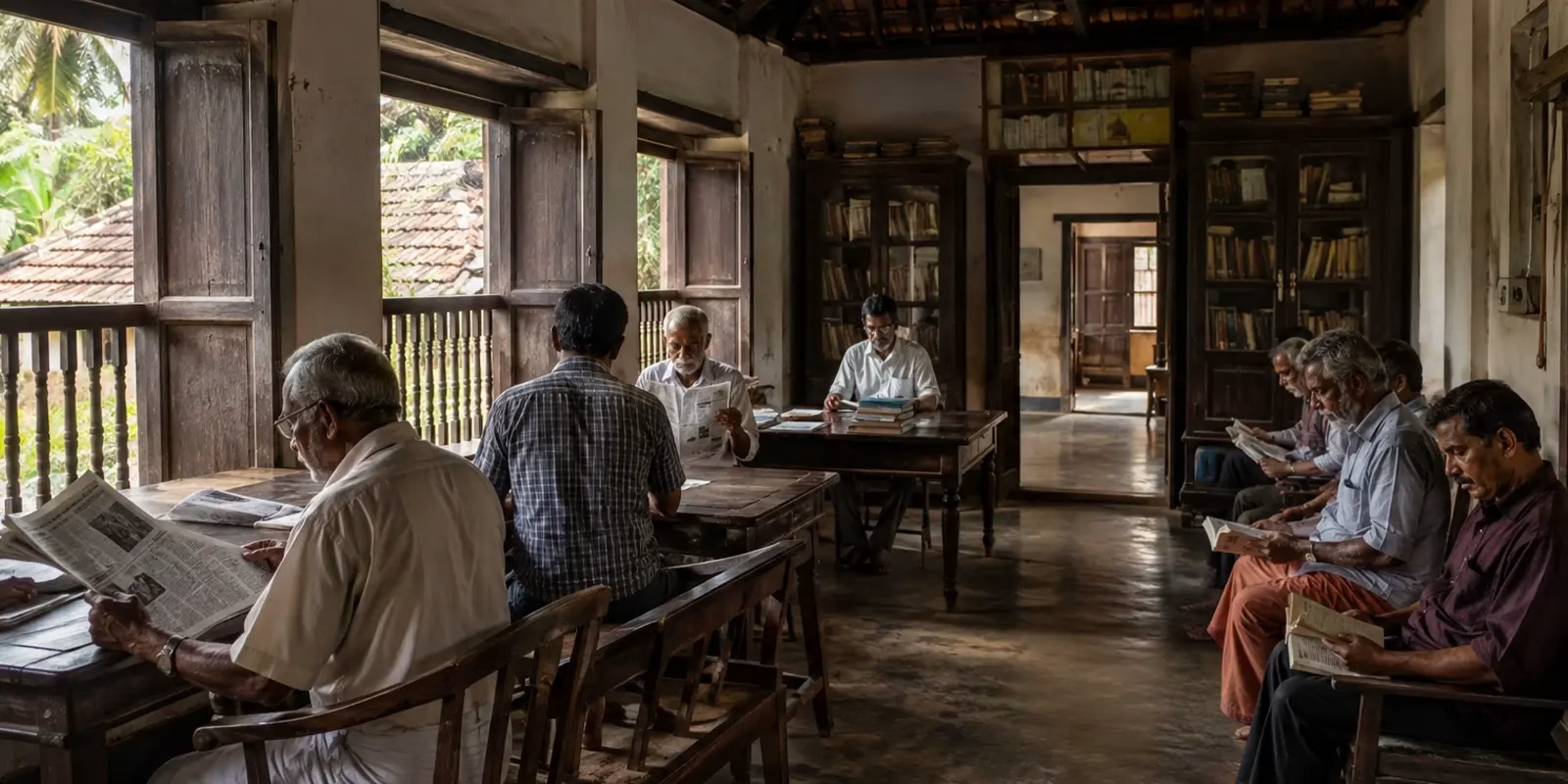
These reading rooms did not ask for a school certificate at the door. Farmers, fishermen and homemakers could simply walk in, pick up a newspaper or a book, and read. For many, it was the first time a place for reading had come right into their own neighbourhood.
By the 1970s, this network had grown into the Kerala State Library Council, with thousands of reading rooms across the state. Many were run by local volunteers rather than government offices.
Reading in Kerala had quietly become something people did together, not something they had to leave their neighbourhood to learn.
The Campaign That Went Door to Door
By the late 1980s, Kerala wanted more than a habit of reading. It wanted every single adult to be able to read at all.
In 1989, Ernakulam became the first district in India to run a full literacy campaign, not inside schools, but inside homes. College students, teachers, and local volunteers walked door to door, sitting with adults who had never held a pencil in their own kitchens and courtyards.
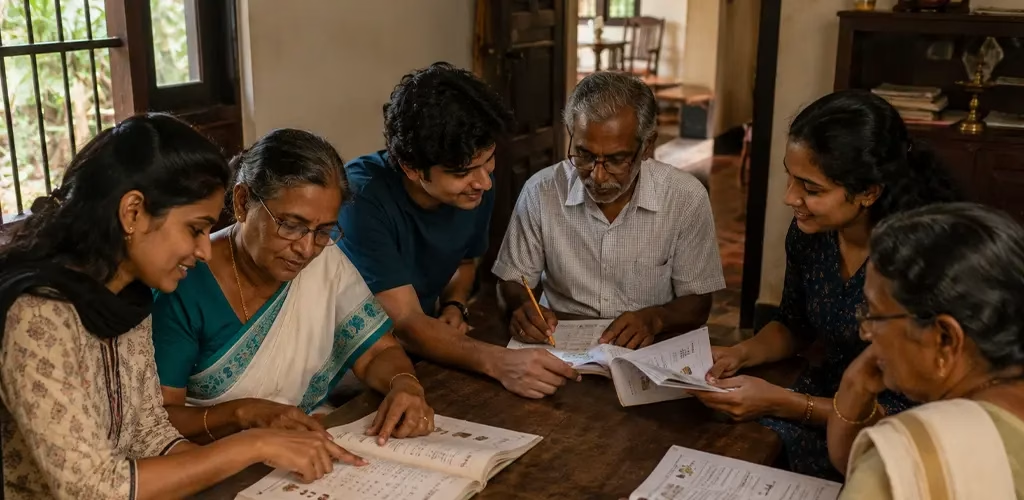
By 1990, this local effort had grown into the Kerala Literacy Mission, and within a year, the entire state was declared fully literate. No new schools were built to make that happen. Old age was never treated as an excuse either; grandmothers in their seventies sat beside teenage volunteers, learning to write their own names for the first time. The classroom, this time, was wherever a volunteer and a learner happened to sit down together.
A Habit That Outlived the Campaign
What made this campaign different was that it never really ended.
Reading rooms that once served fishing villages are still open today, now stocked with newspapers, computers, and children’s books. Kerala still has some of the highest newspaper circulation numbers in the country, a habit that traces directly back to those early libraries.
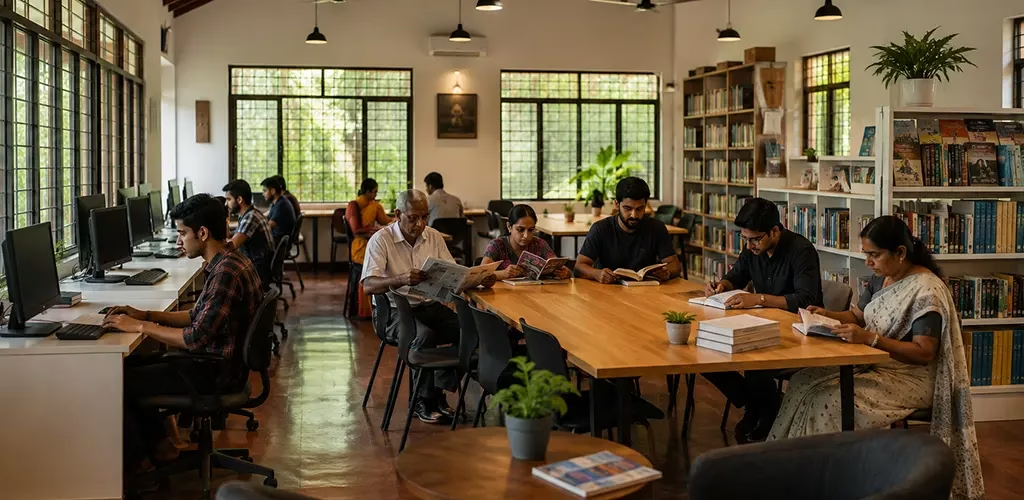
The campaign proved that literacy did not need to wait for a formal school seat. Sometimes, all it took was a room, a book, and someone willing to teach.
From One Reader to an Entire State
Kerala’s literacy rate today is close to one hundred per cent, a number few states have dreamed of achieving.
But the real story is not in the numbers.
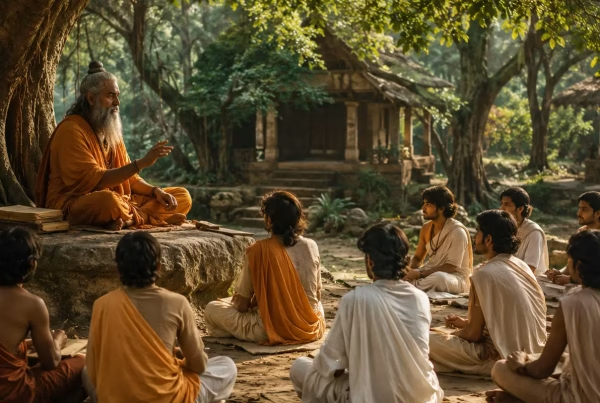
An entire state learned to read not because of one big school system, but because of thousands of small reading rooms and ordinary volunteers who believed that reading should be for everyone, not just those who could sit inside a classroom.