Cheriyal Scroll Art: The Original Village Theatre
Imagine a time when entertainment did not mean staring at a screen, but gathering around a massive, colourful piece of cloth unrolling right in front of your eyes.
In the villages of Telangana, through the Cheriyal scroll paintings, the stories came to life through art.
But what made Cheriyal scroll paintings so special that entire villages would gather to watch them for hours?
The Story Behind Cheriyal Scroll Paintings
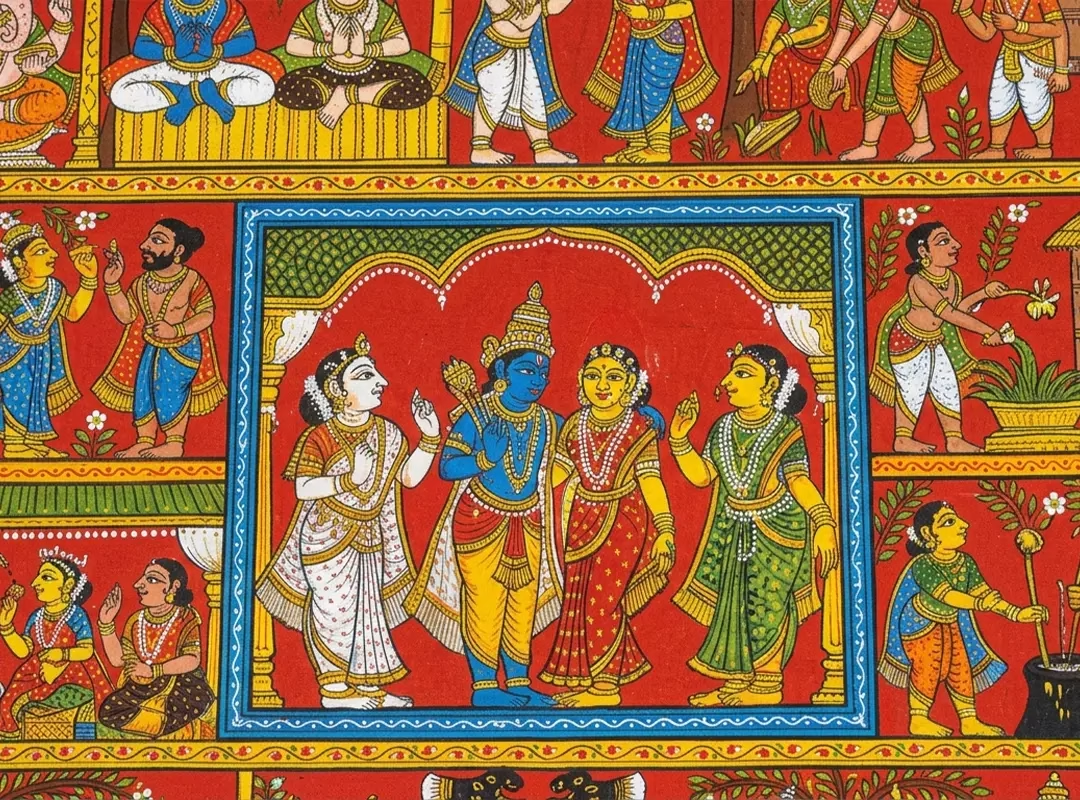
Cheriyal scrolls were far more than ordinary paintings. These massive hand-painted cloths, often stretching 40 to 45 feet, were brought to life by two communities.
The traditional storytellers known as the Kaki Padagollu, earned their living by narrating and singing the stories painted on these scrolls from village to village.
But from where does these scrolls came from?
Behind every Cheriyal scroll were the Nakashis, the artist community who painted them on the request of the storytellers or the communities whose legends these scrolls potrayed.
Each scroll was handcrafted on khadi cotton, coated with rice starch, white mud, tamarind seed paste, and natural gum. Even the colours came entirely from natural sources, giving Cheriyal art its rich, vibrant look. The bold red background of Cheriyal scroll paintings made every character and scene impossible to miss.
Here’s how different communities had their own stories painted on Cheriyal scrolls.
Cheriyal Scroll Paintings for the Herdsmen
For the cattle herders, the storytellers unrolled the tale of Katama Raju, a brave king believed to be the protector of their community.
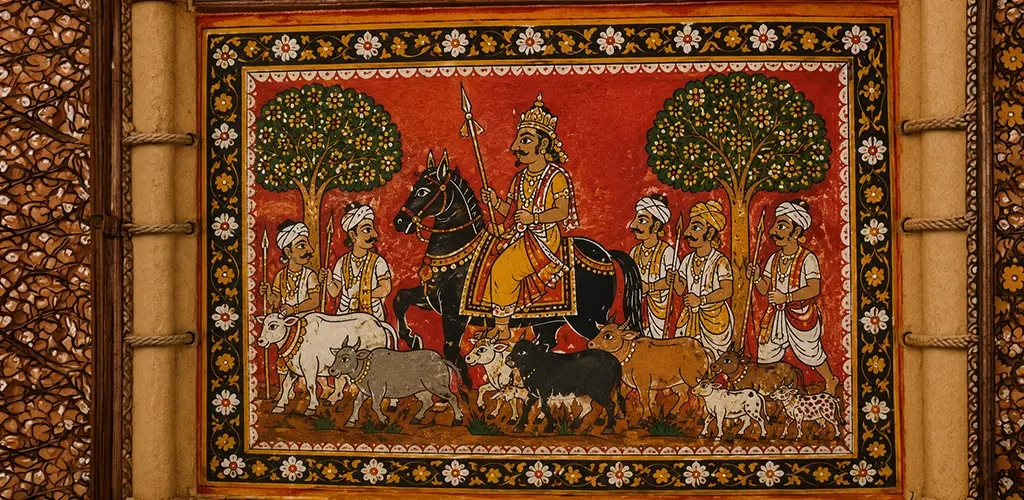
The story relates to the everyday lives of the herdsmen.
Katama Raju goes to war against a powerful rival king, but the fight is not over gold or crowns. Instead, it is for grazing land, so the herders’ cattle would always have enough grass to feed on. As the storyteller revealed each painted panel, the herdsmen saw their own lives reflected in the story. Their daily work was no longer ordinary; it became a tale of courage and pride.
How Cheriyal Art Celebrated the Weaving Community
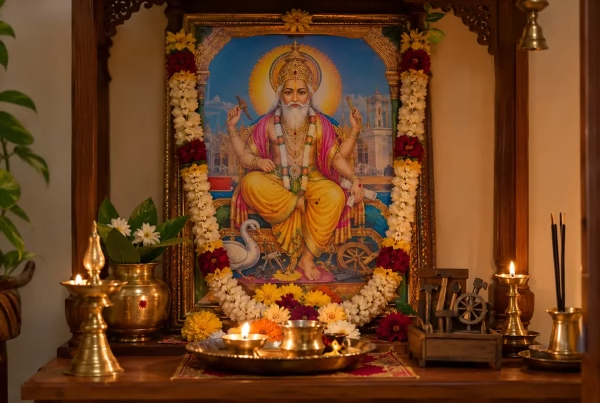
When the storyteller visited a village of weavers, a different Cheriyal scroll appeared – one that told the story of Bhavana Rishi, the guardian of their craft.
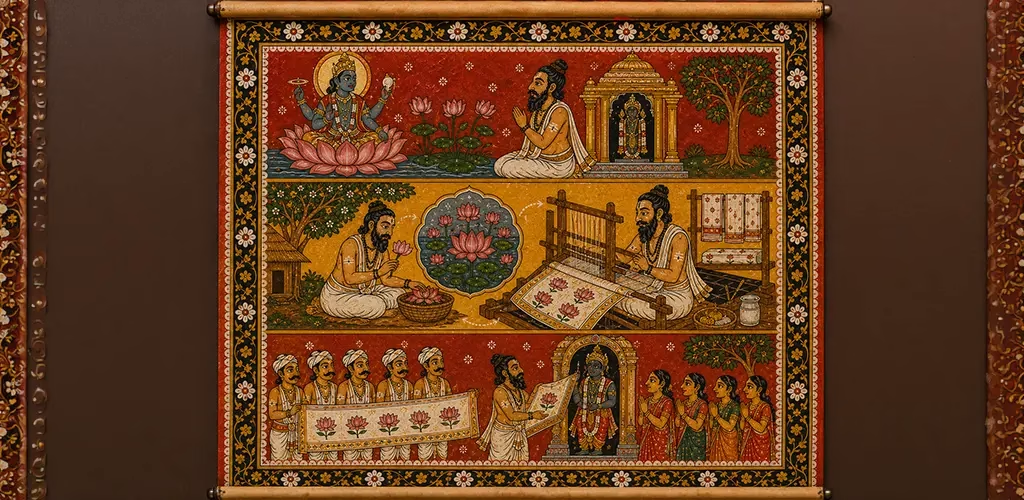
According to the legend, the gods in heaven had no clothes to wear and were shivering. To help them, a holy man named Bhavana Rishi fought a giant demon to protect everyone. He then took magical threads from a holy lotus flower and wove the cloth for the gods.
For local weavers, this Cheriyal art was more than a legend. It honoured their craft and reminded them that their craft was blessed by the divine.
But not every community worked at a loom. Some spent their days high above the ground, climbing towering palm trees.
The Gouda Puranam in Cheriyal Scroll Paintings
For toddy tappers, who climbed tall palm trees to collect sweet sap, the artists painted the Gouda Puranam.
It is believed that the hero of this tale was created from the sweat of Lord Shiva. To match the towering palm trees, these Cheriyal scrolls were painted vertically, showing the hero climbing high into the sky. The story celebrated the skill, balance, and bravery needed for this dangerous occupation.
But Cheriyal scroll paintings did not only celebrate everyday heroes. They also transformed the most frightening myths into stories of hope.
Markandeya and the Story That Defeated Death
The stories about Yama, the God of Death, were told in a way to inspire local artisan communities.
One of the most popular stories was that of Markandeya, a young boy destined to die at an early age. As Yama arrived on his buffalo to take his soul, Markandeya held on tightly to a Shiva Linga and prayed. After this, Lord Shiva appeared, saved the boy, and blessed him. It was a story that gave people hope, reminding them that unwavering faith could overcome even death.
Through stories like these, Cheriyal art gave every community a hero they could relate to and a reason to take pride in their way of life. But if Cheriyal scrolls were once so loved, where are they now?
The Future of Cheriyal Art
As televisions, smartphones, and the internet took over, the crowds around Cheriyal scrolls slowly disappeared. The storytellers grew older, their songs faded, and many families left the tradition behind in search of other work.
Today, only a few artisan families in Telangana still keep this centuries-old art alive. While the giant Cheriyal scrolls are rarely painted anymore.
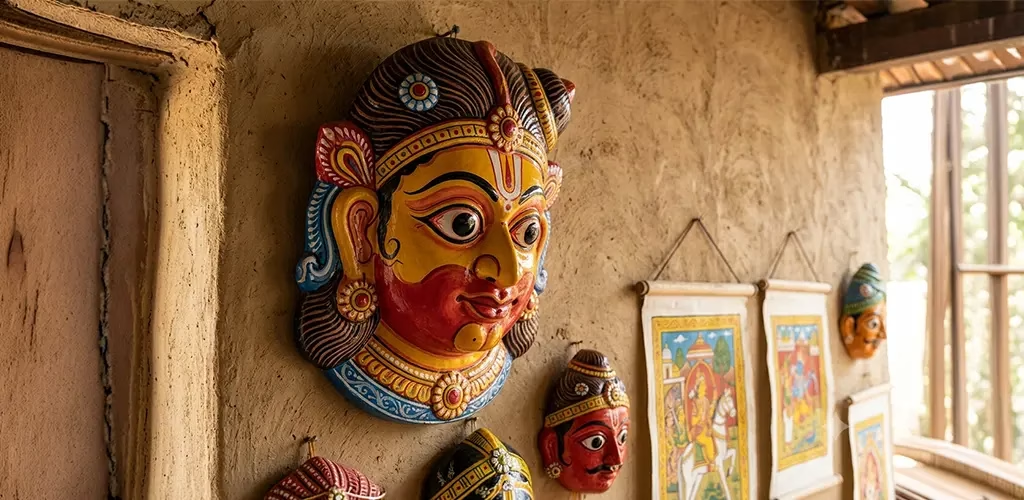
The Cheriyal scrolls may no longer bring entire villages together, but the stories they carry are still alive through smaller canvases, wooden crafts, masks, and wall hangings, allowing this heritage to survive in a changing world. But the real question is: will this tradition fade away, or take a new form to survive?