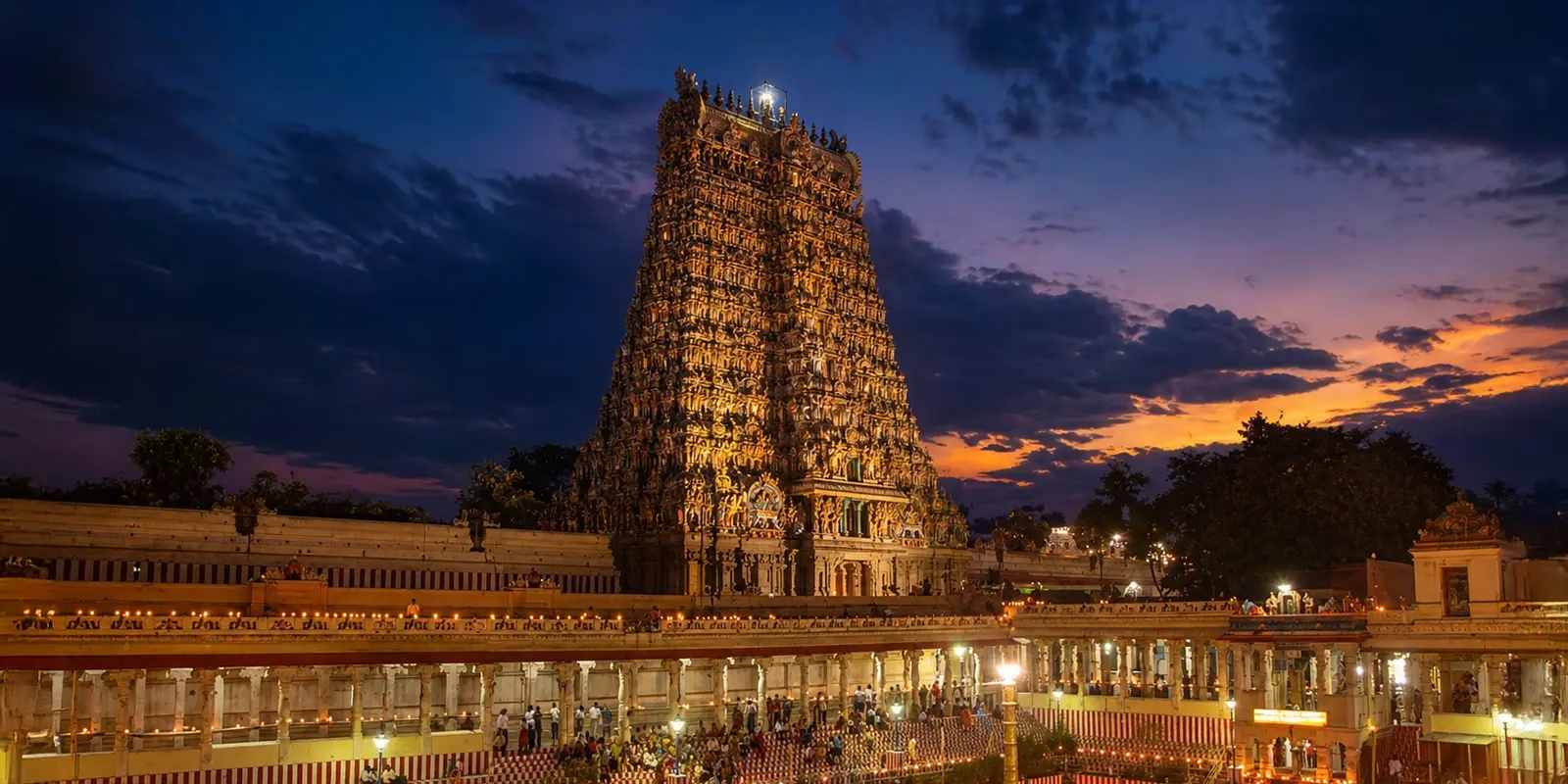
Chithirai Festival: When Madurai Celebrates a Divine Wedding
Every April, the city of Madurai transforms into something unprecedented. Streets turn into ceremonial paths, the air fills with temple music and jasmine aroma, and devotion flows like a living rhythm. At the heart of it is the Chithirai Festival, one of Tamil Nadu’s grandest celebrations, centred around the sacred Meenakshi Sundareswarar Temple.
This is not just a festival – it is a story retold through rituals, processions, and people. Here, mythology steps into the present, and an entire city becomes part of a divine conjugation.
The Story That Built a Festival
The roots of Chithirai are in a powerful legend. Goddess Meenakshi, believed to be an incarnation of Parvati, was not just a deity but a warrior queen who ruled Madurai. Born to a Pandya king, she grew up to conquer lands and establish her authority before eventually meeting Lord Shiva in his form as Sundareswarar.
Their union was not just a marriage. It symbolised balance, power, and divine harmony.
But the story does not end there. Meenakshi’s brother, Lord Vishnu, known locally as Alagar or Kallazhagar, journeys from Alagar Kovil to attend the wedding. In a twist that has become central to the festival, he arrives late, leading to one of the most dramatic and beloved processions in the entire celebration.
What makes Chithirai unique is this merging of two traditions. The Shaivite wedding of Meenakshi and Sundareswarar blends seamlessly with the Vaishnavite journey of Alagar, creating a rare moment of unity between two major sects of Hinduism.
The Festival Through April
Chithirai aligns with the Tamil month of the same name, falling between April and May. In 2026, the celebrations begin around April 19 and extend into early May, building slowly toward the grand wedding.
The festival opens with Kodiyetram, the ceremonial flag hoisting that signals the beginning of divine events. From there, each day adds a new layer to the story.
Meenakshi is crowned as the queen of Madurai in the Pattabhishekam ceremony. Soon after, her Digvijayam or symbolic conquest of directions is performed, reflecting her strength and leadership.
And then comes the moment everyone waits for.
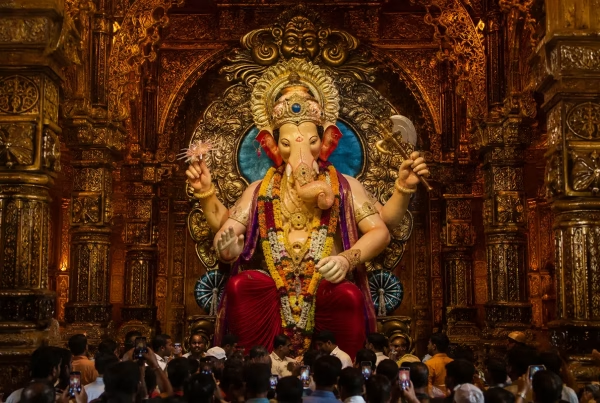
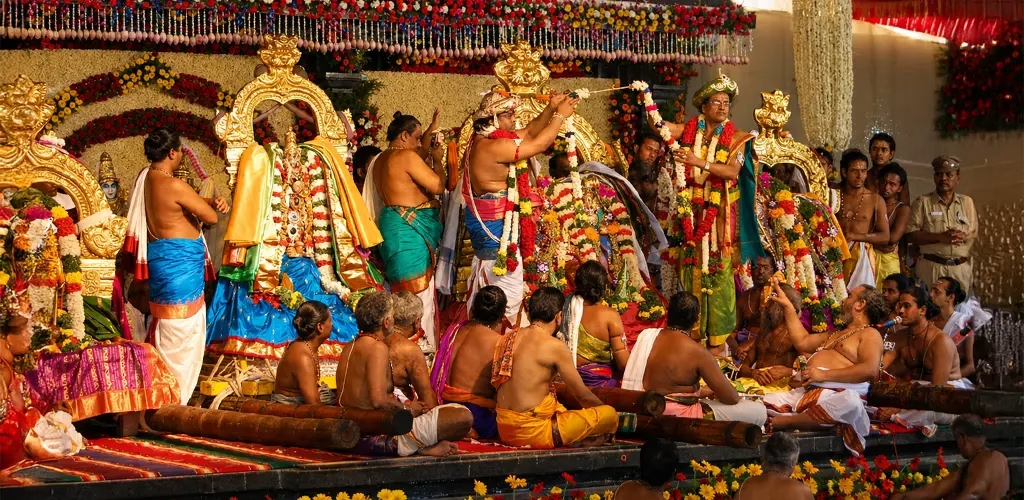
On April 28, the Meenakshi Thirukalyanam takes place. In the early morning hours, under a precise muhurat, priests perform the celestial wedding. The deities are dressed in silk, adorned with gold, and surrounded by thousands of devotees who gather from before sunrise just to witness the sacred union.
A City That Becomes a Procession
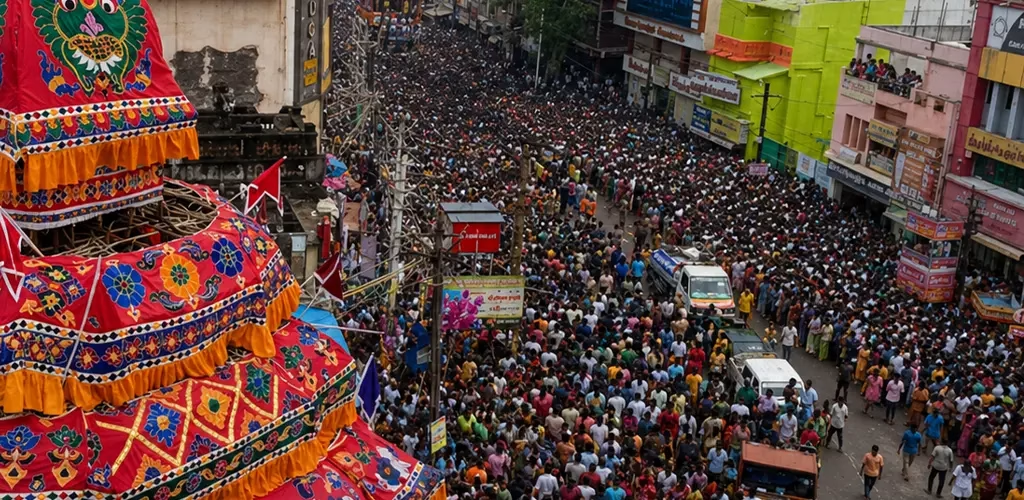
Beyond the wedding, Chithirai is a movement. The deities are taken out of the temple in grand processions across Madurai’s streets. These veethi ula processions bring the divine closer to people, turning roads into sacred pathways.
One of the most iconic moments is the Ther festival, where massive temple chariots are pulled through the city by devotees. It is a collective act of faith, strength, and celebration.
And then comes Alagar.
The Moment of Delay That Became A Tradition
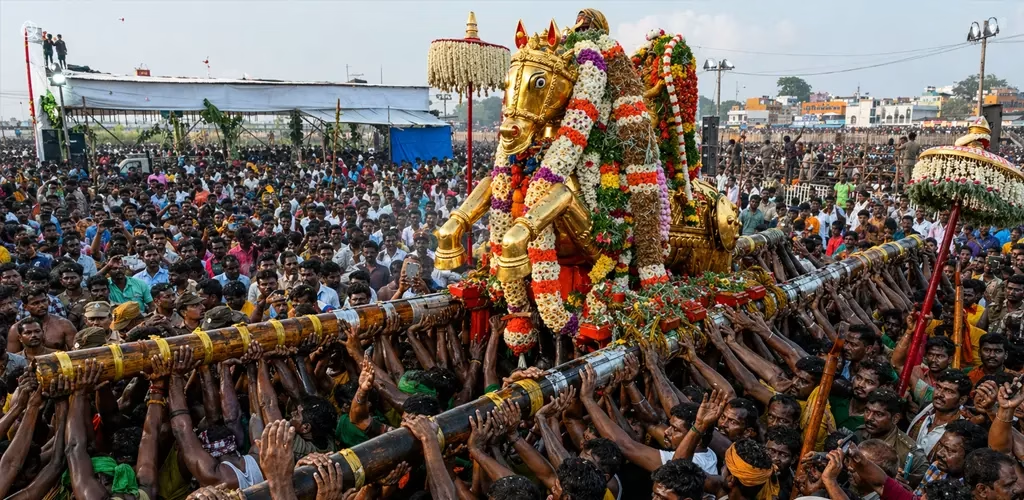
Alagar’s journey from Alagar Kovil to Madurai is filled with anticipation. But as the story goes, he arrives late for his sister’s wedding. Instead of entering the city, he steps into the Vaigai River.
This moment, simple yet symbolic, has become one of the most-watched events of the festival.
Thousands gather along the riverbanks to witness it. It represents acceptance, devotion, and the idea that even divine plans can unfold imperfectly yet meaningfully.
More Than Just a Festival
Chithirai is not just about rituals. It is about what those rituals represent.
It celebrates divine love, but also governance, as Meenakshi is seen as the rightful ruler of Madurai. It brings together Shaivite and Vaishnavite traditions, showing that faith can unite rather than divide.
It also reflects community. People from all backgrounds participate, contribute, and celebrate together. The festival supports local artisans, musicians, vendors, and the entire cultural ecosystem of the city.
For many, it is not just a religious event. It is identity, memory, and belonging.