World Population Day: India's Population Paradox
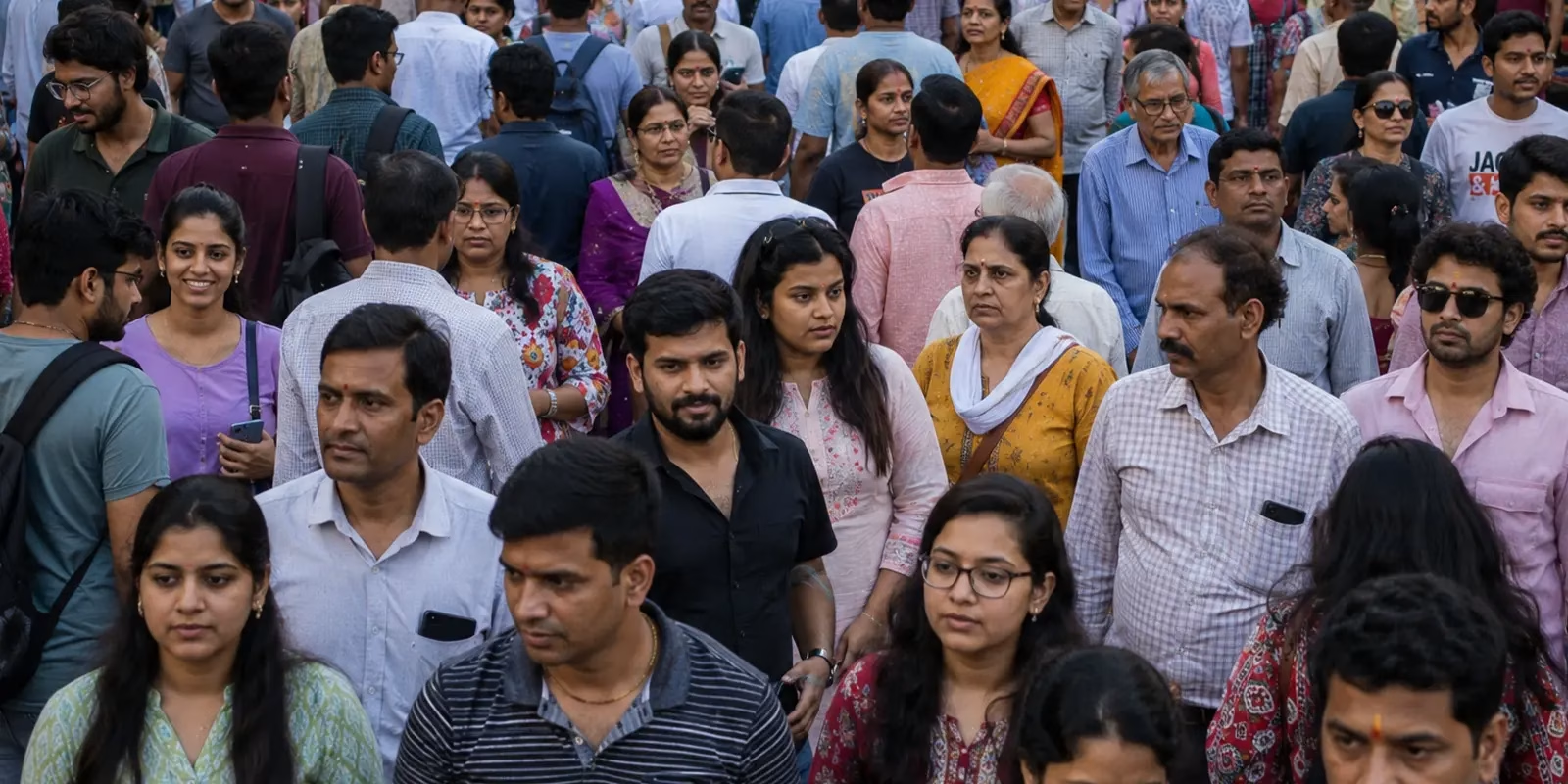
The world’s most populous country has a falling fertility rate.
It might sound ironic, but this is India.
The declining fertility rate in India has sparked new debates about whether population growth is still the country’s biggest challenge. For years, World Population Day has been associated with concerns about overcrowding, limited resources, and the need for smaller families.
Today, the change is happening naturally as people choose to have smaller families. But there was a time when population control in India went too far, becoming one of the country’s most controversial chapters.
The Emergency: When Population Control Went Too Far
What happens when a government decides that your private life and your body belongs entirely to the state?
In 1975, a National Emergency was declared across India. During this twenty-one-month period, many civil rights were suspended, political opponents were jailed, and the government gained far greater control over people’s lives.
But politics wasn’t the only thing that changed.
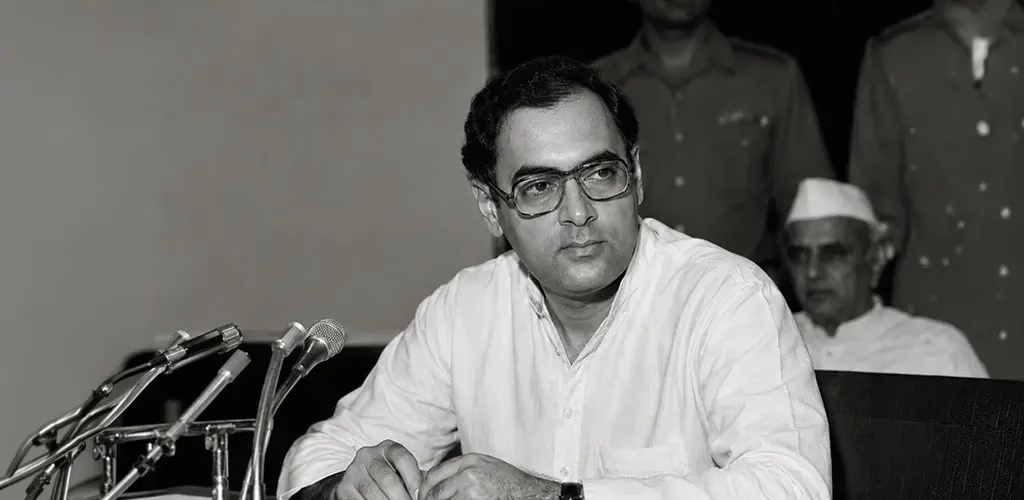
Population control, which had mostly been about awareness and voluntary family planning, suddenly took a very different turn. India had already launched voluntary family planning programs, but Sanjay Gandhi, the Prime Minister’s son, believed they were far too slow.
He decided he would personally solve the nation’s population problem by launching the most aggressive population control measures the world had ever seen.
What followed was a terrifying shift from free choice to absolute force.
A Dictatorship in the Name of Population Control
Imagine launching a nationwide government campaign without holding any official government position.
Sounds impossible, right? But during the Emergency, this became a reality.
Even though Sanjay Gandhi held no official government position or elected office, he received the full support of the state to carry out his population-control campaign. The core of this campaign was a massive sterilisation drive, with men becoming the primary target because vasectomies were quicker and easier to perform in large numbers.
To meet the desired quotas, police and local authorities began picking up men from their homes, workplaces, and even public buses, taking them to sterilisation camps.
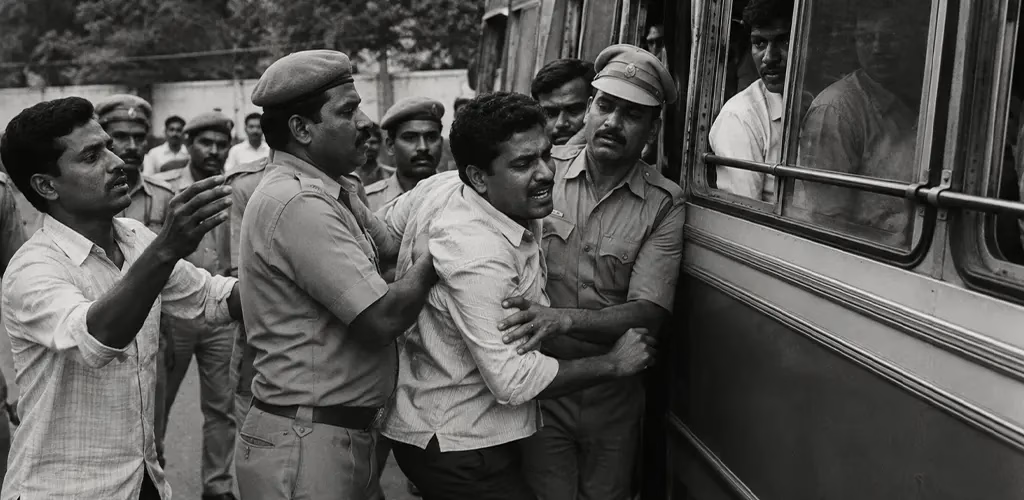
The pressure was so intense that school students were encouraged to persuade their parents to undergo the surgeries. At the same time, teachers, health workers, police personnel, and district officials were expected to bring people to the camps. Those who failed to meet their targets risked salary cuts or even losing their jobs. In some rural areas, villages were warned that their water supply could be cut off if they refused to cooperate.
What started as a population control programme had slowly turned into a campaign driven by fear. But the stories that emerged from these camps were even more disturbing.
When Population Control Became a Numbers Game
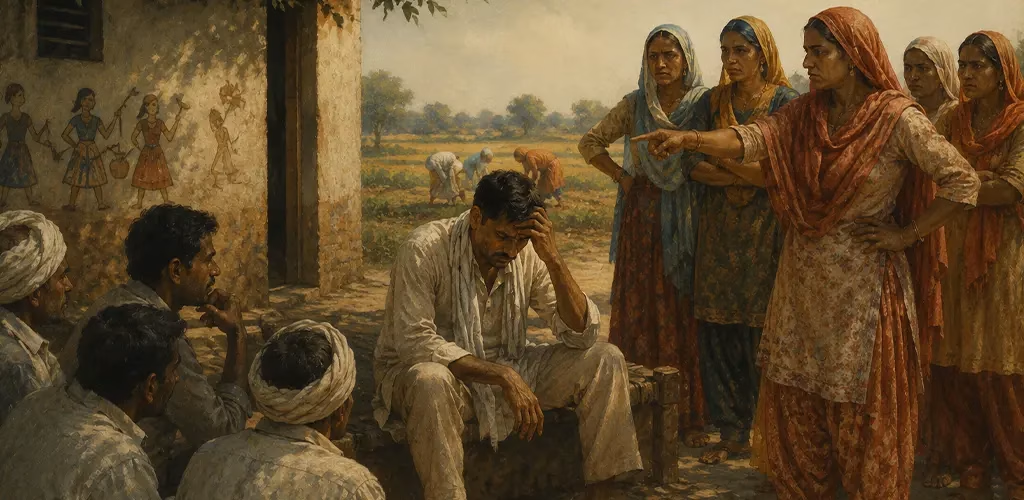
In many villages, people had no idea what a vasectomy actually was. Rumours spread quickly, and many genuinely believed the operation was the same as castration. The fear was so deep that a sterilised man from a village in Haryana later told a reporter, “I feel neither a man nor a woman. The women tell us we are not men anymore and that we should work in the kitchen while they work in the fields.”
The obsession with meeting targets also led to shocking negligence.
In Maharashtra, a farmer named Shahu Ghalake tried telling officials that he had already undergone a vasectomy months earlier. No one bothered to check the records. Instead, he was beaten and forced to undergo the operation a second time, only to increase the sterilisation count.
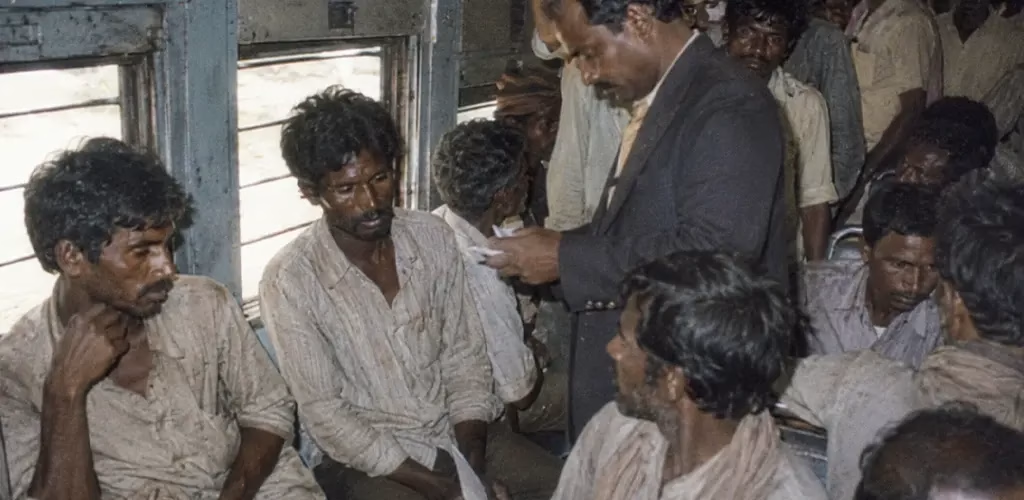
This wasn’t just limited to villages. Even train ticket inspectors were given sterilisation quotas, and passengers caught travelling without tickets were sometimes forced to choose between paying a heavy fine or undergoing a vasectomy. As the pressure to meet targets grew, a strange black market also emerged. Since jobs, promotions, and business licenses were linked to sterilisation numbers, some wealthy people who didn’t want to get sterilised paid poor men to undergo the operation in their name. For around ₹200, a poor man would get sterilised just so someone else could get the required certificate.
But the drive for more sterilisation count did not just destroy people’s dignity; it also cost many of them their lives.
The Cure that Became the Problem
Around 2,000 people died due to botched operations, infections, and the horrific conditions in overcrowded sterilisation camps. And with time, the entire population control drive eventually came to an end, but it left behind a question that still matters today – if a country has to take away your basic human rights to solve a crisis, what’s worse – the problem or the solution?