National Fish Farmers Day: The Story of India’s Fish Farming
Have you ever wondered where the fish on your dinner plate actually comes from?
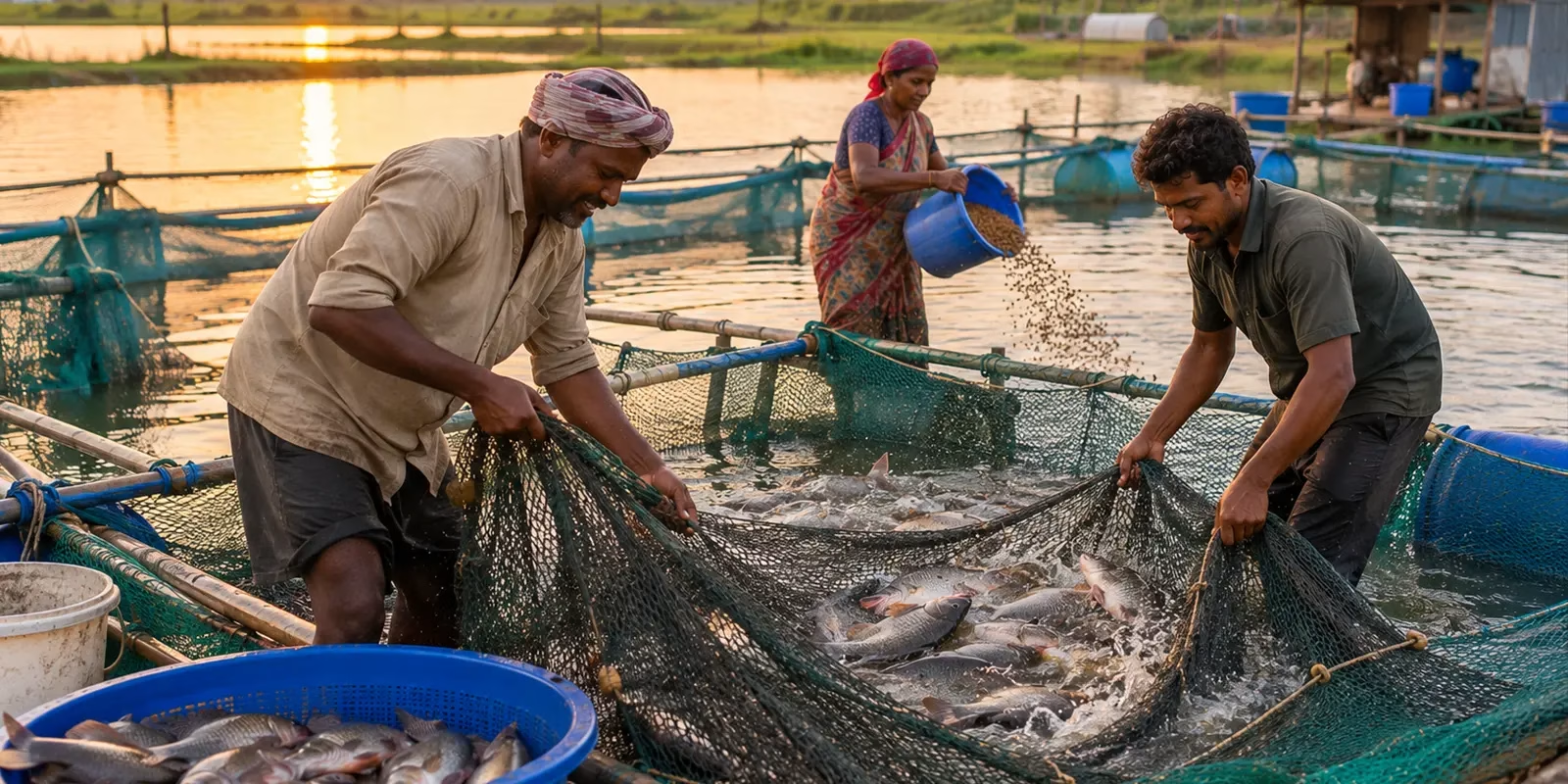
Most of us picture giant boats fishing in the ocean. But a huge share of the fish we eat is actually raised inland in ponds, paddies, and wetlands by ordinary villagers. And every July 10, India celebrates National Fish Farmer Day to honour the millions of fish farmers who make that possible.
It all began in 1957, when two Indian scientists found a way to successfully breed fish in ponds. With farmers no longer dependent on rivers for wild fish, the discovery sparked India’s Blue Revolution and changed fish farming forever.
Behind every fish on your plate is a farming method that we hardly know about. Here’s how India grows them.
How the Apatani Tribe Masters Integrated Fish Farming
Imagine one field could grow both rice and fish at the same time?
In Arunachal Pradesh, the Apatani tribe has been practising integrated fish farming for centuries. The tribe uses bamboo channels to guide fresh mountain water through terraced paddies. In these mountain paddies, rice and fish grow together.
The Apatani tribe grow different varieties of rice while fish swim through the flooded paddies below. The fish naturally protect the crop by eating insects and weed seeds, loosen the mud as they move, and fertilise the fields with their waste. The tribe gets a double harvest of rice and fish without using any tractors or chemical sprays.
As the terrain changes, so do the farming methods.
Pokkali: Kerala’s Natural Fish Farming System
Down in the coastal fields of Kerala, the seasons completely transform the landscape twice every year. During the monsoon, heavy rains wash the salt out of the soil, turning the fields into freshwater farmland. But once the dry season begins, the freshwater recedes, and salty seawater from the ocean slowly makes its way back across the land.
Instead of fighting these seasonal changes, the farmers learned to work with them through a fish farming practice called Pokkali farming.
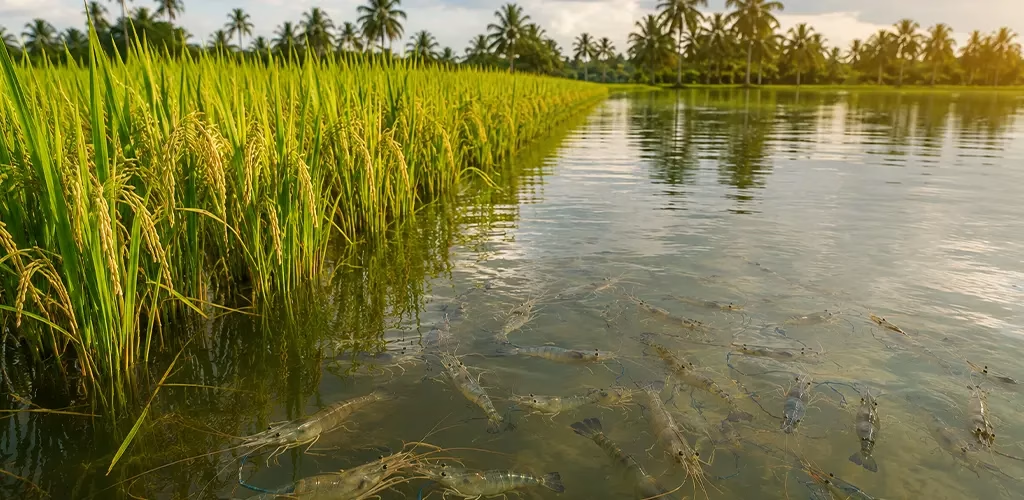
During the monsoon, the farmers grow a special variety of native rice that grows tall enough to stay above the floodwaters. Once the rice is harvested and the dry season brings salty seawater back, they open the water channels and let the sea flow into their fields. The same rice fields soon become a natural home for prawns and shrimp, giving farmers a second harvest without needing a separate fish farm.
The real hero of the Pokkali farming lies in the Pokkali rice itself, which naturally survives in saline conditions by filtering out salt that would kill most other crops.
How Wastewater Supports Fish Farming in Kolkata
Imagine if a city’s sewage could become fresh food? It may sound unbelievable, but this is one of the world’s most remarkable fish farming businesses.
On the outskirts of Kolkata lies a vast network of shallow ponds called Bheries that transforms millions of litres of wastewater into a natural source of food for fish. Sunlight and naturally occurring bacteria break down the wastewater, producing plankton that fish feed on. This allows farmers to raise healthy fish without buying commercial feed.
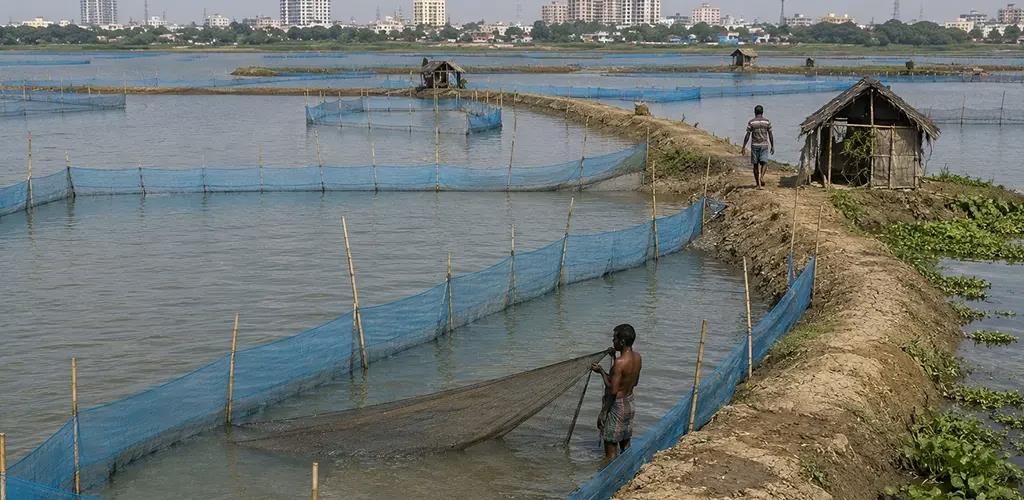
But these ponds do much more than raise fish.
The same natural process that feeds the fish also cleans the wastewater within a few weeks. As a result, Kolkata reduces its treatment costs while producing over 10,000 tonnes of fresh fish every year.
From city wetlands, the story now moves to the floodplains of Northeast India, where rising waters bring opportunity instead of disaster.
Canal Trapping: Flood Based Fish Farming
Every summer, in Assam and Northeast India, the monsoon brings massive floods. The rivers overflow their banks, filling canals, roadside ditches and open fields with water. Rather than fighting the floods, the local villagers have learned to work with them through an age-old method called canal trapping.
The villagers place specially woven bamboo fish traps in narrow channels where the floodwater naturally flows. The trap allows water and fish to flow through freely. Since it has a one-way opening, the fish cannot swim back out.
This traditional fish farming practice provides villagers with a steady supply of wild fish every monsoon. But what if you don’t have rivers, floods, or even a pond? That’s where a completely different kind of fish farming begins.
The New Age of Fish Farming Business
While traditional integrated fish farming relies on large natural water bodies, biofloc fish farming enables fish to be raised in compact indoor tanks. Today, many entrepreneurs are adopting this method to build a profitable fish farming business using far less land and water.
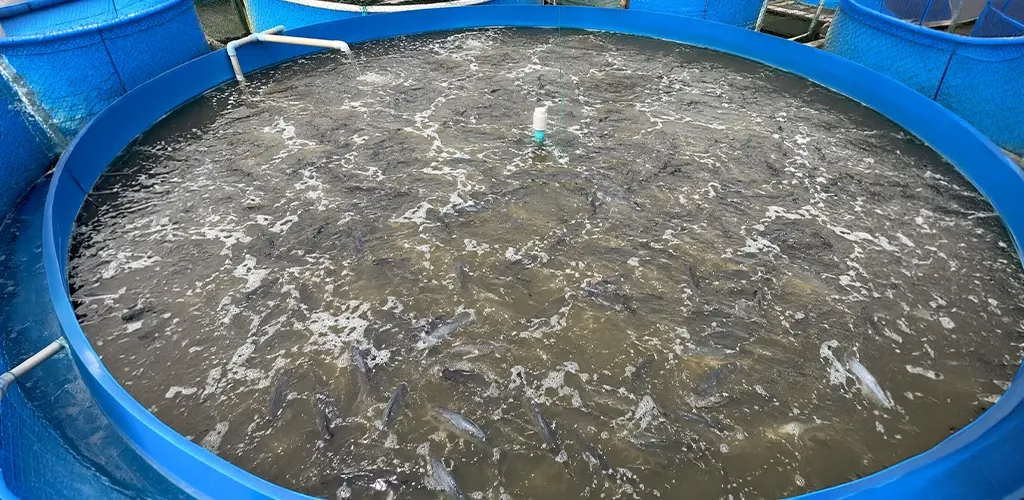
While traditional ponds require frequent water changes, biofloc fish farming allows beneficial bacteria to recycle fish waste into food, keeping the water clean and making biofloc one of the most water-efficient and sustainable ways to farm fish.
From ancient traditions to modern technology, fish farming has never been just about raising fish. Every method is the result of generations of learning, innovation, and a deep understanding of nature. That’s why every meal carries a story long before it reaches our plate.