The Panchatantra's Long Journey Around the World
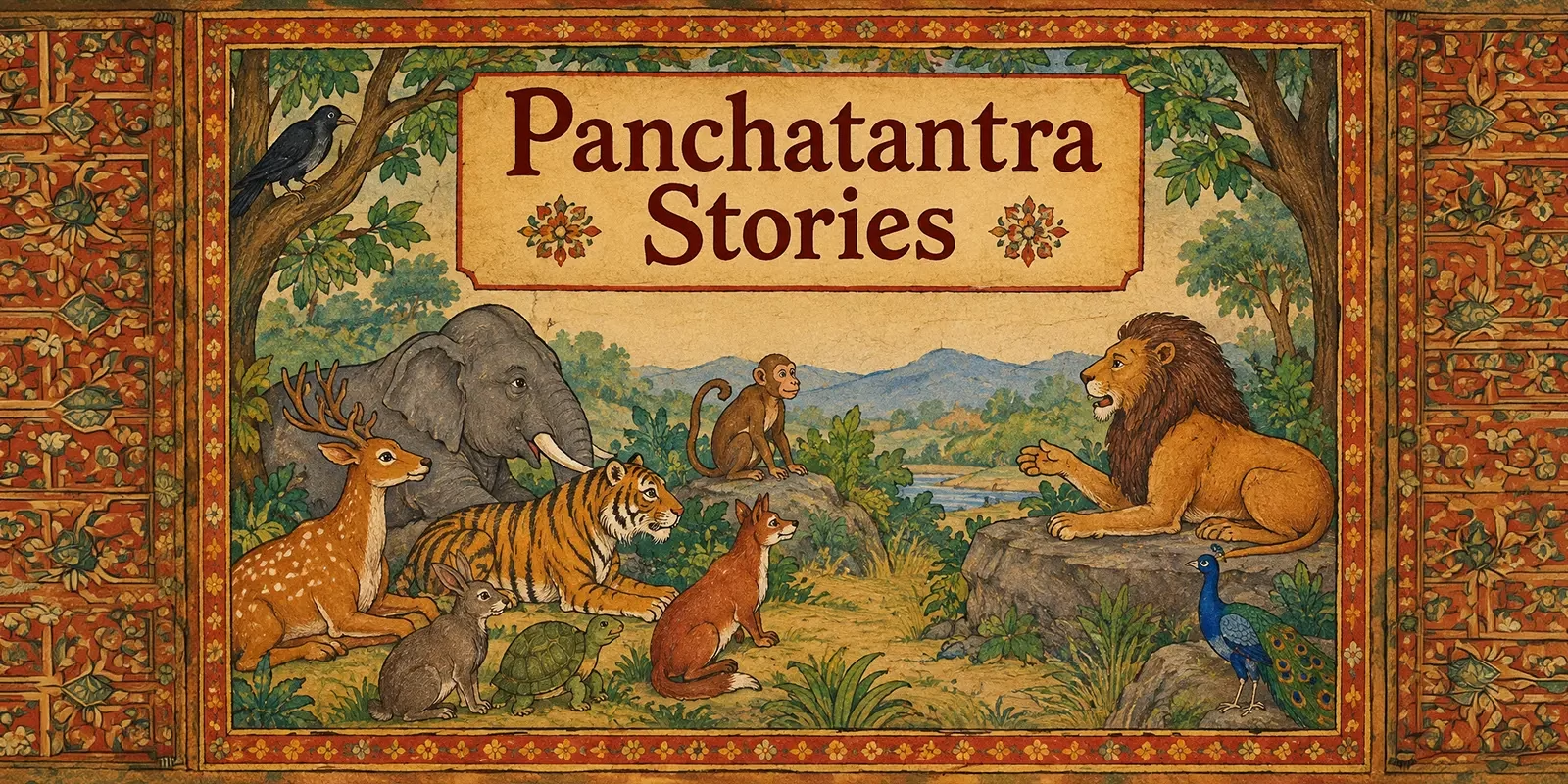
Most of us grew up hearing stories about a clever rabbit tricking a lion, a monkey outsmarting a crocodile, or a tortoise learning a lesson the hard way.
What many of us don’t know is that stories like these can be traced back to an ancient Indian book called the Panchatantra.
Written around 2,300 years ago, it travelled far beyond India, moving through Persia, the Arab world and Europe before reaching readers in more than 200 languages.
So how did these Indian animal stories travel so far?
Panchatantra Wasn't Really Written for Children
The Panchatantra wasn’t really meant for kids at bedtime. It was written for princes, and not the sharpest ones either.
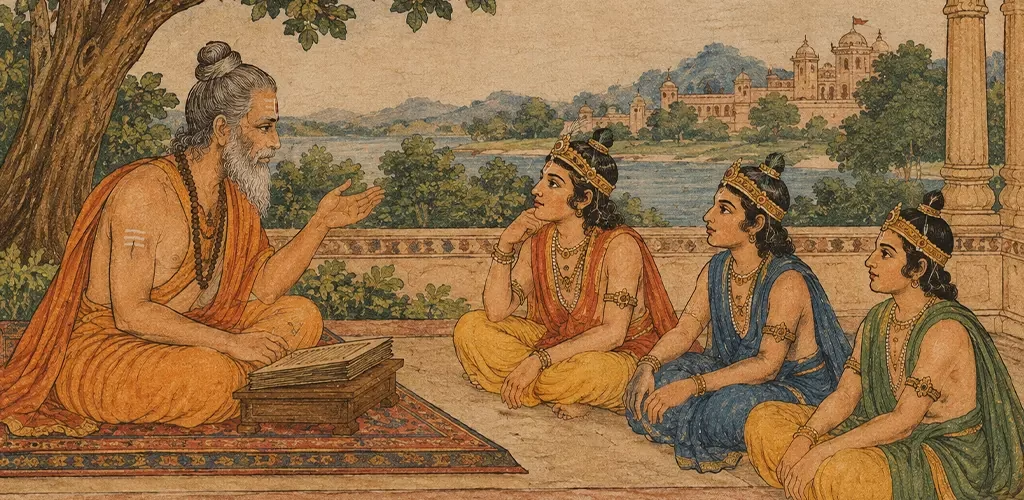
The story goes that a scholar named Vishnu Sharma was handed the job of teaching three royal sons some basic sense and statecraft. Rather than sit them down and lecture them, he told them stories about animals instead, five books of them, which is where the name comes from: panch means five, tantra means something like principles or strategies.
The idea was simple: make a difficult lesson easier to remember by turning it into a story.
And perhaps that is one reason the Panchatantra travelled so far because a good story tends to stay with you.
From India to Persia
The Panchatantra’s journey beyond India began centuries after the original stories were put together.
Around the 6th century, a Persian physician named Borzuya is traditionally said to have travelled to India in search of the book. He took the stories back and translated them into Middle Persian.
That version did not survive, but its influence did.
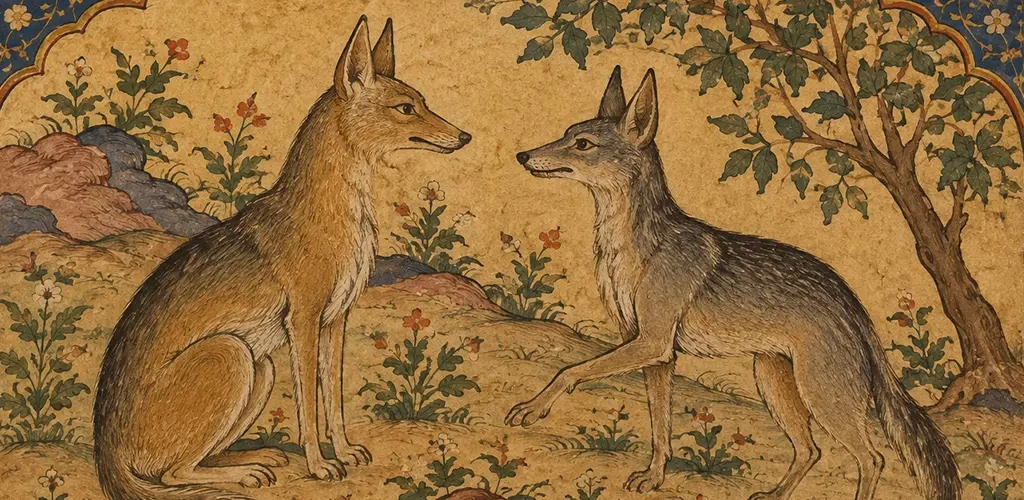
By the 8th century, the stories had reached the Arabic-speaking world and appeared as Kalila wa Dimna, named after two jackal characters in the collection.
This Arabic version became extremely important.
Many later translations into European languages came through Kalila wa Dimna rather than directly from the original Sanskrit Panchatantra.
So by this point, the stories were no longer travelling as one fixed book.
They were travelling from storyteller to storyteller, and translator to translator.
When the Stories Reached Europe
From Arabic, the stories continued moving.
They appeared in Greek, Hebrew and Latin during the Middle Ages. From Latin, versions eventually made their way into Spanish, Italian, German, English and several other European languages.
And naturally, the stories changed along the way.
Names were changed. Places were adapted. Some stories mixed with local folk tales. A fable that began with an Indian lion and jackal could end up sounding quite different after passing through several languages and cultures.
Yet the basic ideas remained familiar.
A clever animal outsmarts a stronger one.
A selfish character creates their own problem.
A friend gives bad advice.
Someone ignores a warning and pays the price.
These are not ideas that belong to just one culture. This might be one reason Panchatantra stories kept finding new audiences.
Why Did the Stories Survive So Well?
Imagine how difficult it is to keep one story unchanged for hundreds, let alone thousands, of years.
The Panchatantra did not have the advantage of modern printing, digital archives or the internet. Its stories survived because people kept copying, translating, retelling and adapting them.
And the use of animals made that easier.
A lion can represent pride. A fox or jackal can represent cleverness. A crow can be cautious or resourceful. A foolish animal can make the same mistakes people make.
You don’t need much explanation to understand the lesson. This is probably why Panchatantra stories eventually appeared in more than 200 languages.
The stories could change their names and settings without losing the basic lesson underneath.
How the Panchatantra Outlived Its Journey
You don’t have to pick up a copy of the Panchatantra to know its stories. They have travelled across languages, cultures and continents, appearing in Aesop’s Fables, children’s books, comics and stories told by grandparents.
The clever rabbit, proud lion and scheming jackal keep returning because the problems they face still feel strangely familiar.
The Panchatantra may have begun with three princes, but its real journey began when its stories left the palace. And thousands of years later, they still haven’t stopped travelling.