The Jagannath Temple: A Place of Unanswered Mysteries
Would you worship an unfinished idol?
Have you seen a flag that seems to move against the wind?
And can a kitchen exist where it never runs out of food?
If your answers to these questions are no, a temple exists where yes is the answer to these questions, every day.
Within the Jagannath Temple in Puri, one of the four sacred Char Dham pilgrimage sites in Hinduism, these mysteries simply exist. But what is it about this temple that continues to draw people?
Where the Story of Jagannath Begins
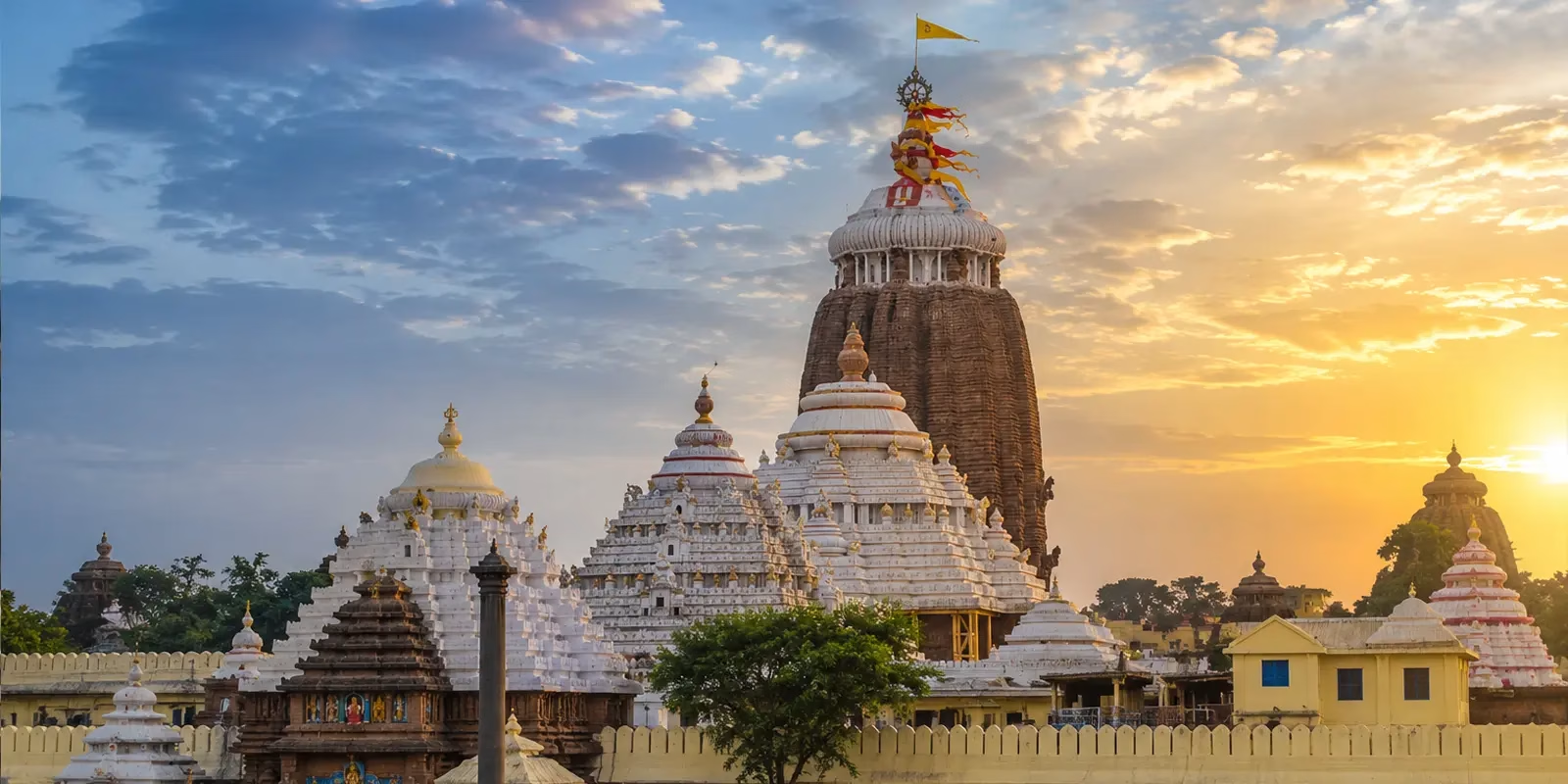
Every year, millions of devotees visit the Jagannath temple to seek the blessings of Lord Jagannath, his elder brother Balabhadra, and their sister Subhadra. The temple was built in the 12th century by King Anantavarman Chodaganga Deva of the Eastern Ganga dynasty.
But the true story of Jagannath begins long before these stone walls were raised. It begins with a king, a deity, and a dream that led to the creation of one of the most unusual idols ever worshipped.
According to the Skanda Purana, King Indradyumna once heard about a deity called Nilamadhava. The king was very intrigued about the deity and wanted to find it anyhow, so he began the search across the land, travelling far and wide. But despite every effort, he could not find Nilamadhava.
Then, one night, the king went to bed, and it changed everything.
He had a dream where a divine voice told him that the Lord was waiting for him at the seashore. The next morning, the king rushed to the beach. Right there, floating near the water, he found a huge log of wood. He believed this was far more than an ordinary piece of wood and was meant to be carved into the idol of the Lord.

But when the king went to the carpenters to shape this sacred wood, none of them could do it because their tools broke in the process.
Then one random day, an old, mysterious sculptor appeared at the palace. He offered to carve the idols, but he had one strict condition: he wanted to work completely alone inside a locked room for 21 days. No one, not even the king, could open the door until the time was up.
The king agreed, and the sculptor locked himself inside.
Days turned into weeks. The palace grew quiet, but as time passed, the silence inside the room became eerie.
There was no sound of a chisel, no thud of wood, nothing. The king was worried and feared that the old man had passed away; he lost his patience and ordered his guards to unlock the doors early.
When the heavy doors opened, the sight was unbelievable for everyone.
The room was completely empty, and the old sculptor was no longer there. On the floor stood three wooden idols of Lord Jagannath, his brother Balabhadra, and his sister Subhadra. They were completely unfinished. Their arms were just short stumps, and they had no feet at all.
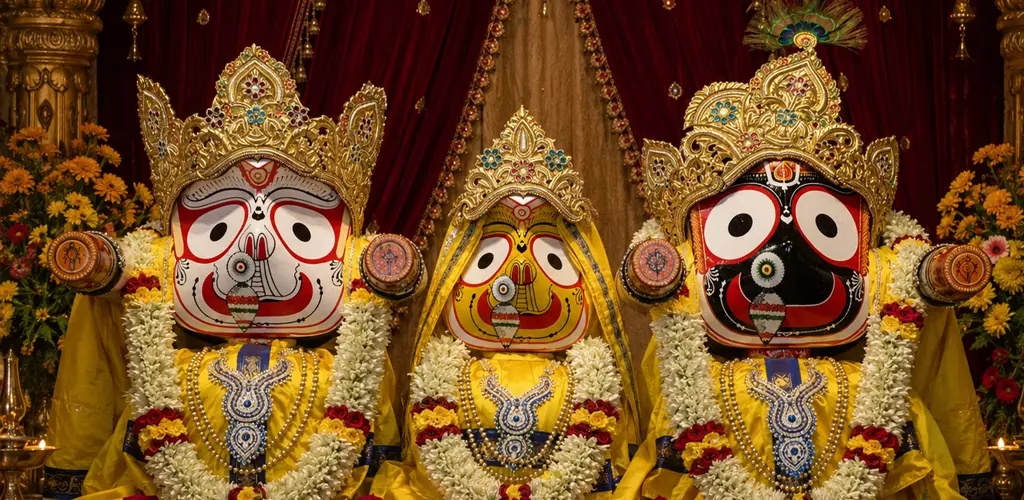
The king was disheartened, believing his impatience had ruined everything. But later it was believed that this was exactly how the Lord wished to be seen in this world. And this is why even today Lord Jagannath is worshipped in this very form.
But an unfinished idol is not the only mystery here. What happens in the temple roof defies the laws of nature completely.
The Flag That Defies the Wind
High above the temple stands the Patita Pavana Bana, the sacred flag that has become one of Jagannath Temple’s most talked-about mysteries.
The flag always flutters in the exact opposite direction of the wind. But how can that happen?
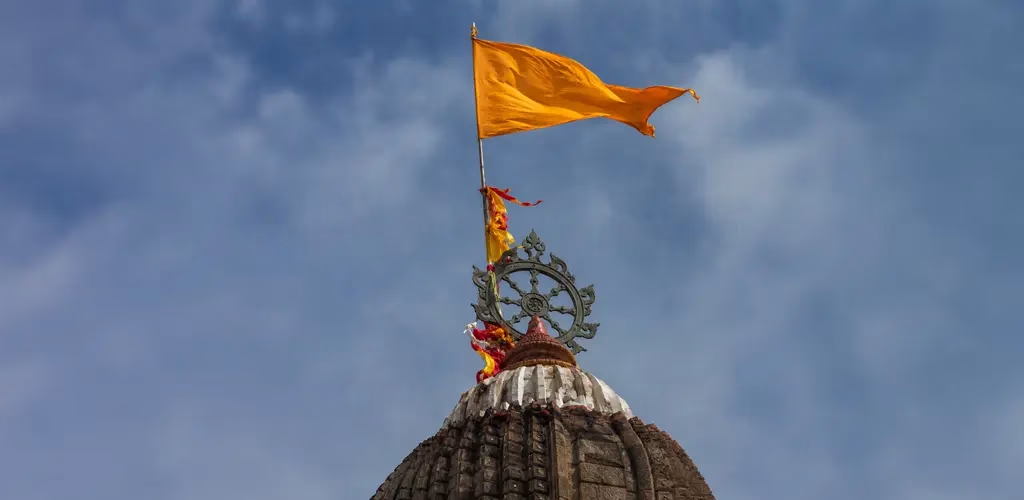
Scientists have tried to explain this phenomenon for decades. Some believe the height of the temple and the sea breeze may create unusual airflow around the structure. Others point towards what is known as the wind tunnel effect, where the shape of a building changes the direction in which air moves.
There are a number of theories around this, yet none of them fully explain why it happens.
But the mystery of the flag does not end here; it deepens when the sun begins to set. Every single afternoon, a priest performs Dhwaja Parivartan, climbing nearly 200-foot-high dome to change the flag, with no safety equipment. This ritual has continued for generations, and according to local belief and temple tradition, if the flag is not changed for even a single day, the temple must remain closed for the next 18years.
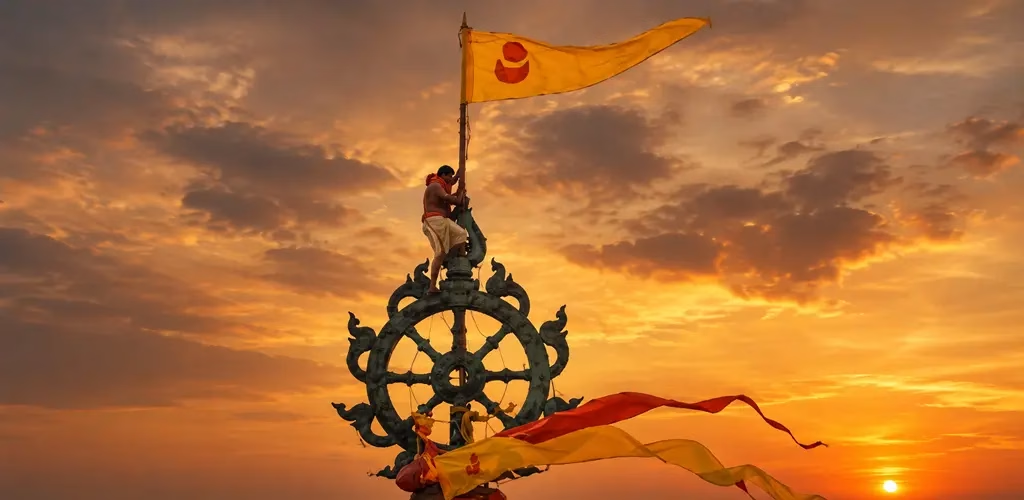
Why exactly eighteen years? No one knows. There is no historical text or logical explanation that provides an answer to this, yet it remains a strict, unbroken vow.
As your eyes move down from the flag, you will notice a massive metal wheel just below it, one that has a strange mystery of its own.
Nilachakra: A Wheel That Watches Every Direction
Standing nearly 20 feet tall with a weight of around one tonne is the Sudarshan Chakra, also known as Nilachakra.
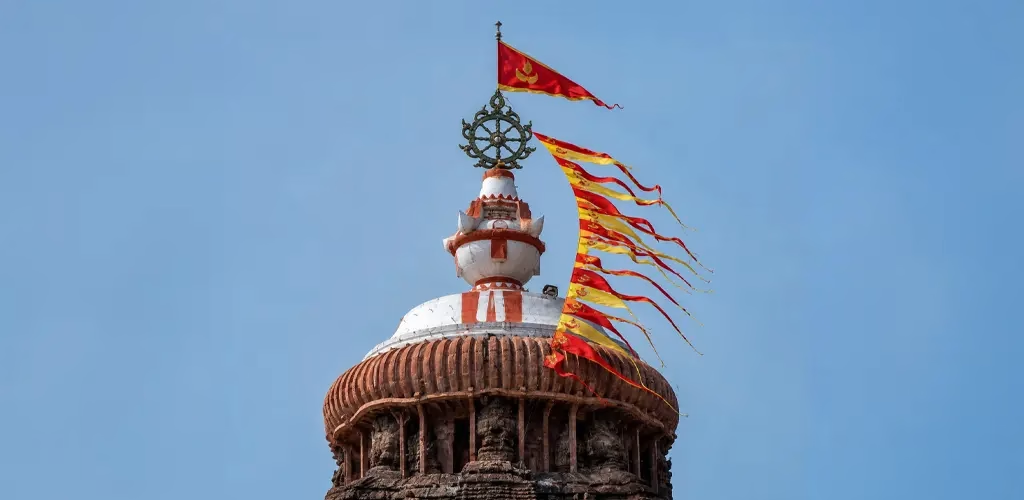
What fascinates everyone about the Nilachakra is that no matter where you stand in Puri, it always seems to face you. Scientists believe this is because of its perfect shape and placement on the temple. But for devotees, it is a reminder that Lord Jagannath is always watching over them.
But these visual wonders are nothing compared to what happens when you walk through the main entrance of the temple.
The Ocean That Falls Silent
The Jagannath temple is built right at the shore of the sea, so the sound of waves is always around it. But the moment you take a step through the main entrance, everything changes.
The main entrance of the temple is known as Singhadwar, or the Lion’s Gate. When you are standing just outside this gate, you can clearly hear the ocean waves. The sound is loud and heavy.
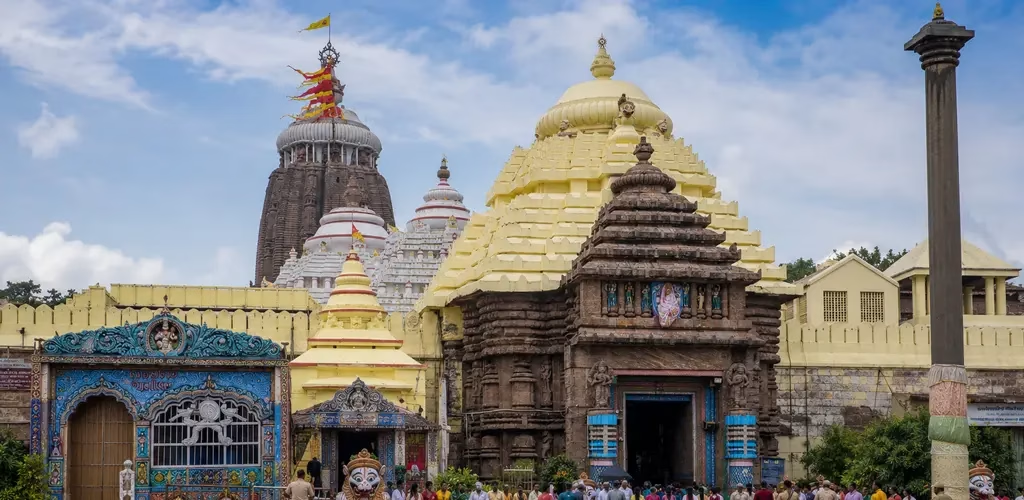
But the moment you walk through the gate and enter the temple, the sound of the ocean disappears completely. It does not get quieter – it completely stops. While science points to the temple’s thick stone walls acting as a natural sound barrier, locals believe the ocean intentionally falls silent out of pure respect for the Lord.
But the sound of the waves is not the only thing that changes inside these walls; what happens inside its kitchen is even harder to explain.
The Secrets of Jagannath's Mahaprasad
The kitchen of the Jagannath Temple is not an ordinary kitchen. It is one of the largest functional kitchens in the world, where hundreds of cooks work over open fires to prepare the Mahaprasad for thousands of devotees every day.
But the real magic lies in how the food is prepared.
The chefs of the temple stack 7 clay pots directly on top of each other over a single wood fire. As per basic science, the pot closest to the fire should cook first, and the one at the top should take the longest. But the exact opposite happens here. The food in the seventh pot cooks first. Then the sixth, then the fifth, moving downward until the bottom pot is finally ready.
But how is that possible? Scientists try to explain this through steam dynamics, but if it were just a matter of simple steam, why is the same thing not commonly seen in every kitchen?
Another belief linked to the temple kitchen is just as fascinating. The temple kitchen is believed to prepare the exact same amount of food every single day. On some days, a few thousand people visit; on festival days, hundreds of thousands arrive. Yet, the Mahaprasad never falls short for a single devotee, and at the end of the day, not a single handful of food is left over to be thrown away.
The Secret Hidden Beneath the Jagannath Temple
Beyond the visible wonders of the Jagannath temple lies a mystery that remained hidden until 2022.
During the Srimandir Parikrama Project, researchers from IIT Gandhinagar carried out a special ground survey around the Jagannath Temple. They used a technology called ground-penetrating radar, which allowed them to study what is beneath the surface without digging into the ground.
What they found shocked everyone.
Beneath the temple’s parikrama area were signs of ancient structures – walls, rooms, pottery, metal objects. And then came perhaps the most intriguing discovery of all.
A buried, underground passage stretching nearly 90 meters in length and around 6 meters wide. Where did it lead? Who built it? And what purpose did it once serve?
Was it a secret escape route? Or did it lead to a hidden part of the temple? No one knows for sure. Perhaps one more mystery of the Jagannath Temple still lies hidden beneath the earth, waiting to be uncovered.
Where Science Ends, Jagannath Begins
Science has tried to explain the mysteries of the Jagannath Temple for a long time. Some theories make sense, while others leave us with even more questions.
But maybe that is exactly why this place is so special; because whatever science cannot explain is where Jagannath begins. And what science cannot explain, faith answers with a stronger and even better standpoint.