Guru Purnima: How India Taught Before Classrooms
Before there were classrooms, textbooks, or even schools as we know them today, there was a different way of learning.
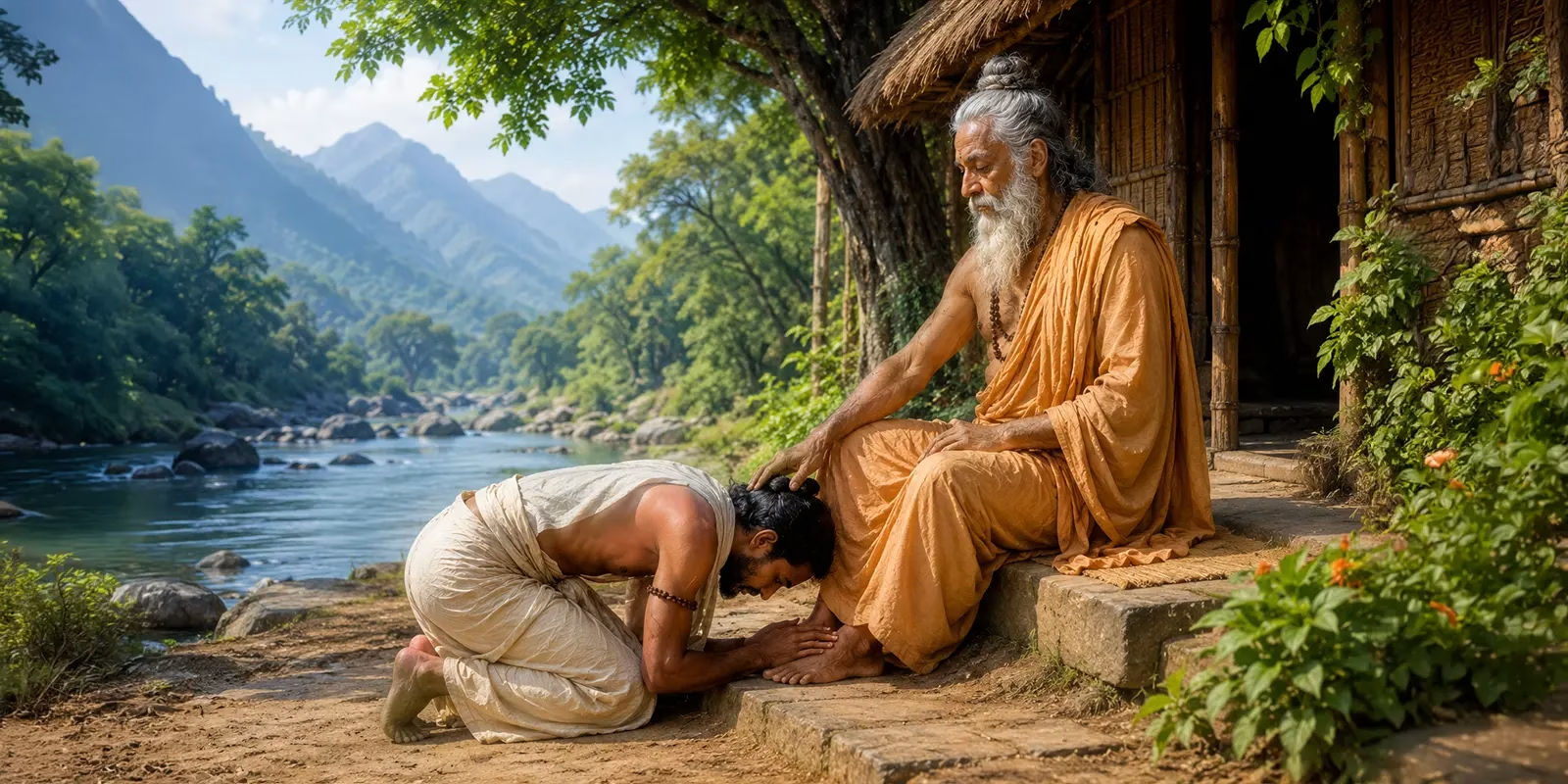
A student used to sit beside a teacher, listen carefully, ask questions, and slowly learn not just a subject, but a way of living.
This was the ancient idea of the guru-shishya tradition.
But how did this tradition begin? The answer takes us back to the Himalayas, where the story of the first guru begins.
The First Guru and the 84-Year Wait!
Long ago, in the ancient Himalayas, a mysterious yogi known as Adiyogi appeared. He sat completely still, absorbed in a state of deep bliss. People gathered around him, curious about who he was and what he was doing.
But when days turned into weeks, and nothing happened, most of them eventually left. Only seven seekers stayed. They wanted to understand what the yogi knew, and they were willing to wait for an answer.
They begged him to teach them, but the yogi refused, saying they were not ready yet. Instead, he gave them simple practices to prepare their minds and bodies. The seven seekers followed these practices with great discipline and waited patiently for 84 years.
Finally, on the first full moon after the summer solstice, the yogi opened his eyes. He saw that their years of discipline had made them calm, clear and free from ego. He gave those seven seekers his teachings and began his journey as Adiguru, the world’s first guru.
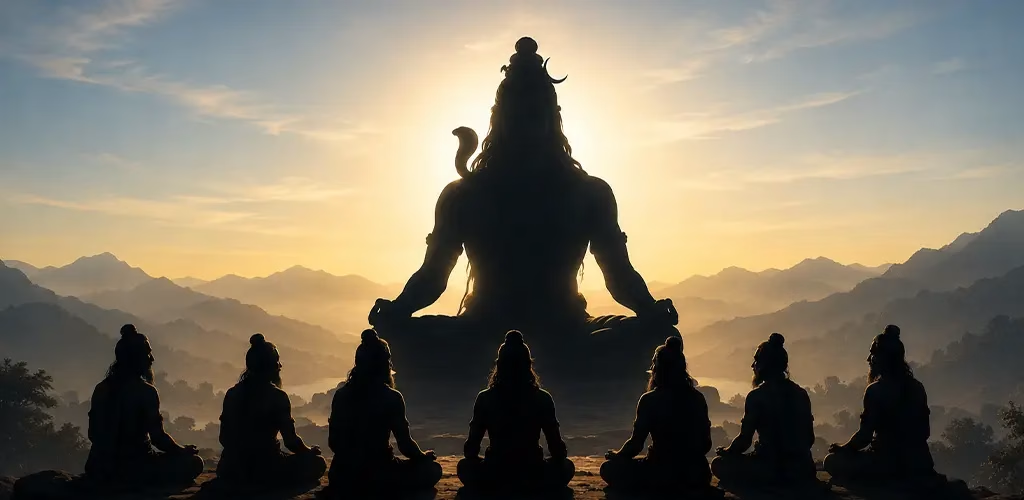
On that night, which we now remember as the very first Guru Purnima, he began transmitting the 112 fundamental paths of human transformation to those seven seekers, who are known as the Saptarishis.
Vyasa: Who Gave Guru Purnima Its Other Name
The first guru passed his knowledge to seven seekers. But there was a problem: how could knowledge survive for thousands of years when there were no books, libraries, or internet?
For generations, knowledge was passed from teacher to student through memory and words. But one forgotten lesson could break that chain. This is where Sage Vyasa enters the story.
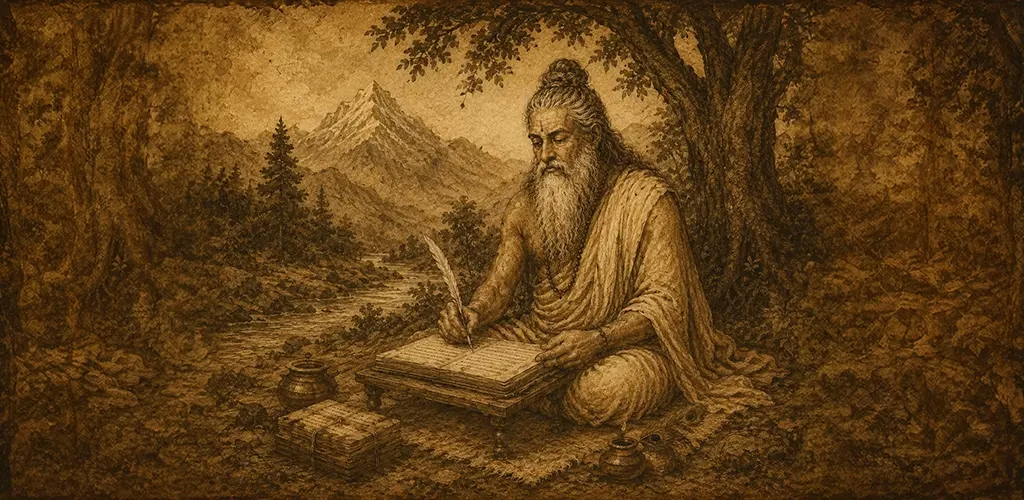
Vyasa is famously known for compiling the Mahabharata, but his contribution went far beyond the epic. He brought together the vast Vedic knowledge and organised it into the four Vedas, making it easier to preserve and pass on to future generations.
But what makes Vyasa the ultimate guru is that he did not keep his knowledge to himself.
He taught each Veda to four of his students, Paila, Vaishampayana, Jaimini and Sumantu, and gave each of them the responsibility of passing it on. Another student, Romaharshana, was given the task of sharing stories, history and the Puranas.
Guru Vyasa showed that being a true guru is not just about how much you know, but about how willingly you share that knowledge with others. His students did not simply learn from him, but they carried his teachings forward and passed them on to the next generation. This is also why Guru Purnima is celebrated as Vyasa Purnima.
The Full Moon That Marked the Buddha’s First Teaching
The story of Guru Purnima does not end with Adiyogi or Sage Vyasa. The same full moon also holds a special place in Buddhism, where it marks the beginning of another important teacher-student journey.
In the Buddhist tradition, this day is remembered as Ashadha Purnima, also known as Dharma Chakra Day, because the Buddha gave his first sermon after attaining enlightenment on this day. He sat with five disciples who were once his companions at Sarnath, near Varanasi, where he shared his teachings and set the Wheel of Dharma in motion.
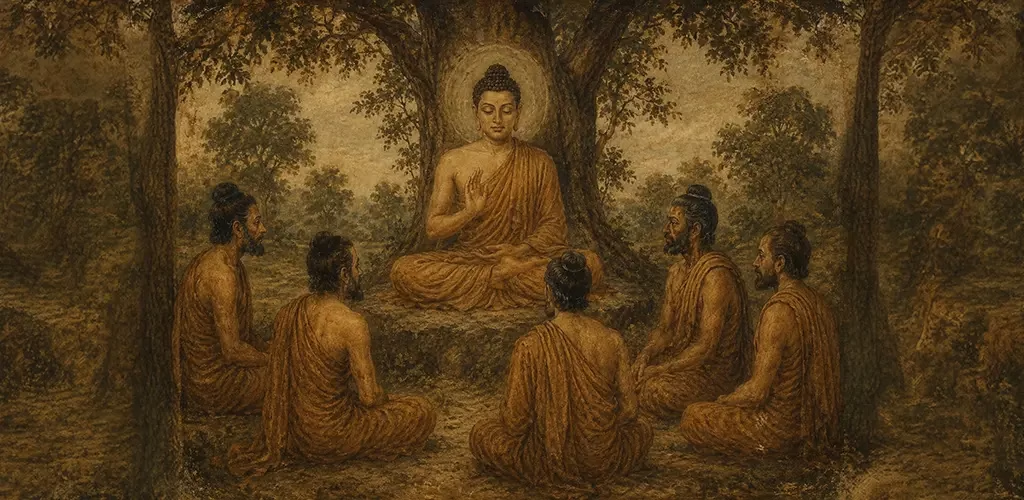
Different teachers, different traditions, and different stories, but they all share one simple idea: that the knowledge becomes more meaningful when it is shared with others.
Do We Still Need a Guru?
Today, we may learn from books, classrooms, videos, and even a quick Google search. But some lessons still come from people.
A true guru does not simply give us answers. They help us understand our mistakes, see things differently, and find our own way forward. And perhaps that is why the idea of a guru still feels relevant today. The lessons we remember the longest are often not the ones we read, but the ones someone patiently helped us understand.