Beyond the Saffron Robes: The Extraordinary Man That Swami Vivekananda Was
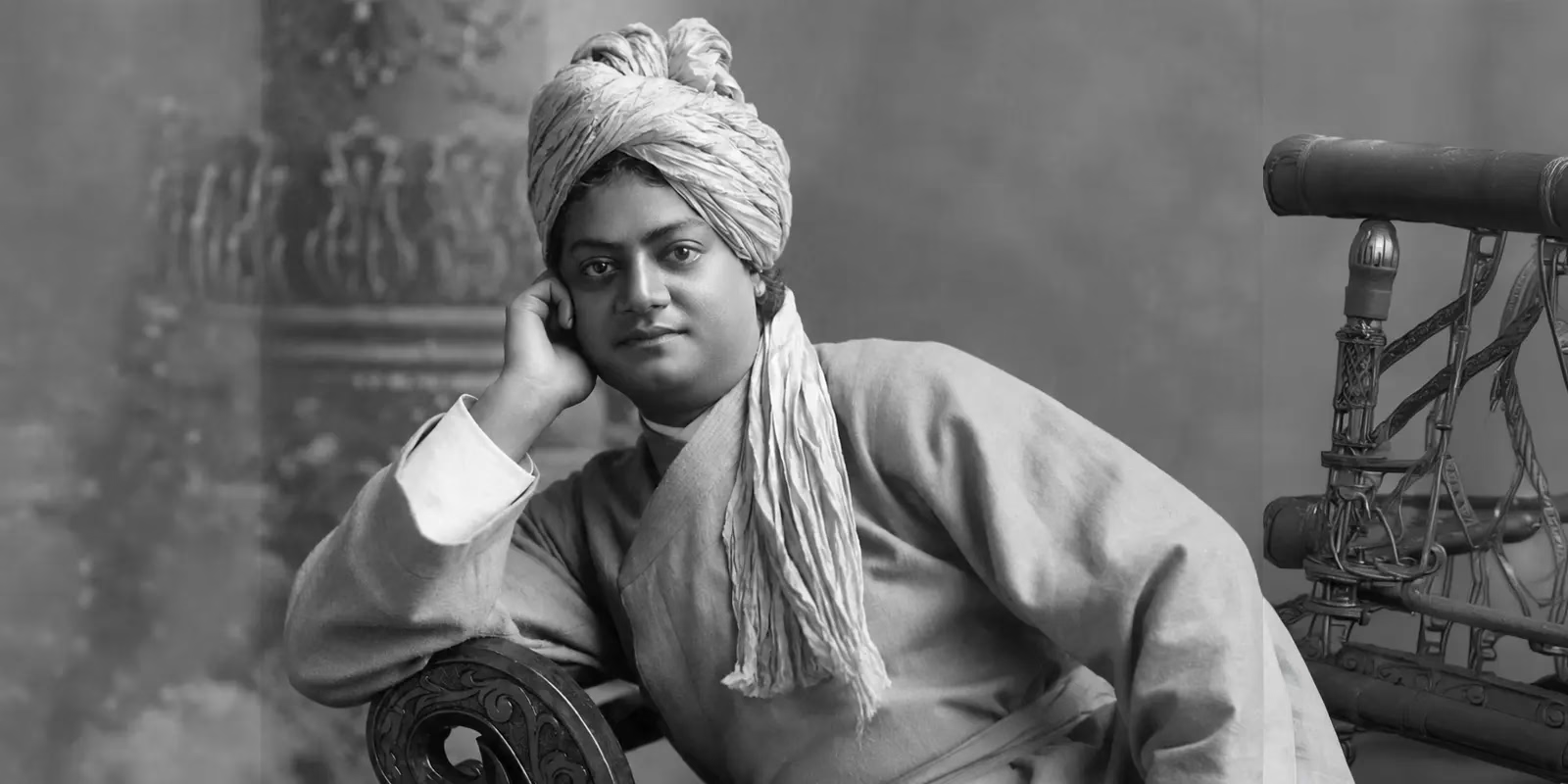
We all know Swami Vivekananda as the great monk in the orange attire, but hardly anyone knows Narendranath Datta, the man behind the title.
There is an untold story of a man who faced deep struggles long before he changed the world. But his legendary journey began in a dark place that almost broke him.
And it is waiting for the world to glance at it.
The Journey That Began With Poverty
Before the world honoured him as Swami Vivekananda, he was just a young guy named Narendra watching his entire life fall apart.
When Narendra’s father died suddenly, his family lost everything overnight. Creditors constantly knocked on their door and the kitchen shelves stayed empty for days. Every morning, he would look at the tiny bit of food left for his mother and siblings and tell a kind lie to settle his own pangs of hunger. He would smile and say a friend had already invited him out for a big lunch and then would walk out the door. In reality, he wandered the streets starving, just so his family could eat his share.
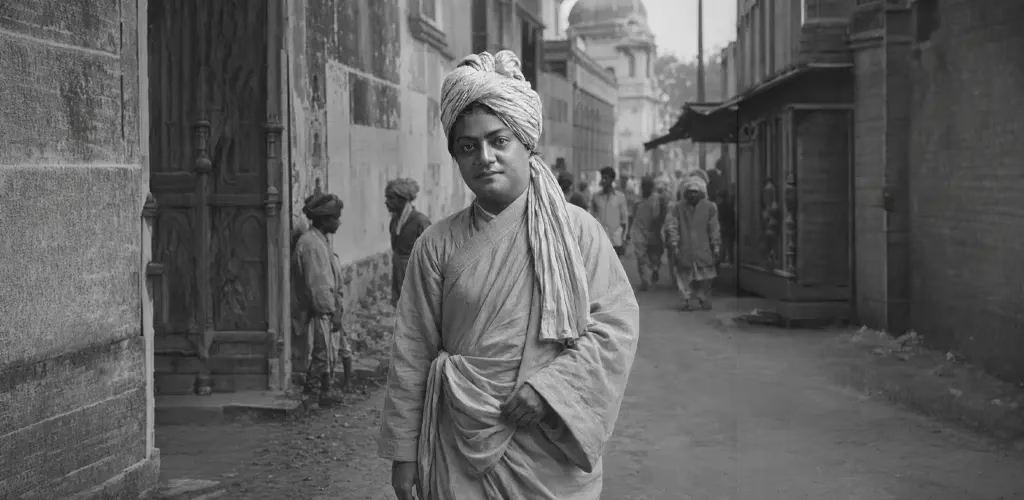
This deep poverty left him feeling totally broken and lost. He needed an escape from this pain, which eventually drove him to pack his bags and walk straight toward the quiet, frozen mountains of the north.
The Uttarakhand Awakening of Vivekananda
By 1890, the weight of the world was crushing Narendra. He was deeply sad because his sister had just died, and he felt helpless about his family’s poverty. Since he could not find peace in the city, he decided to leave everything behind.
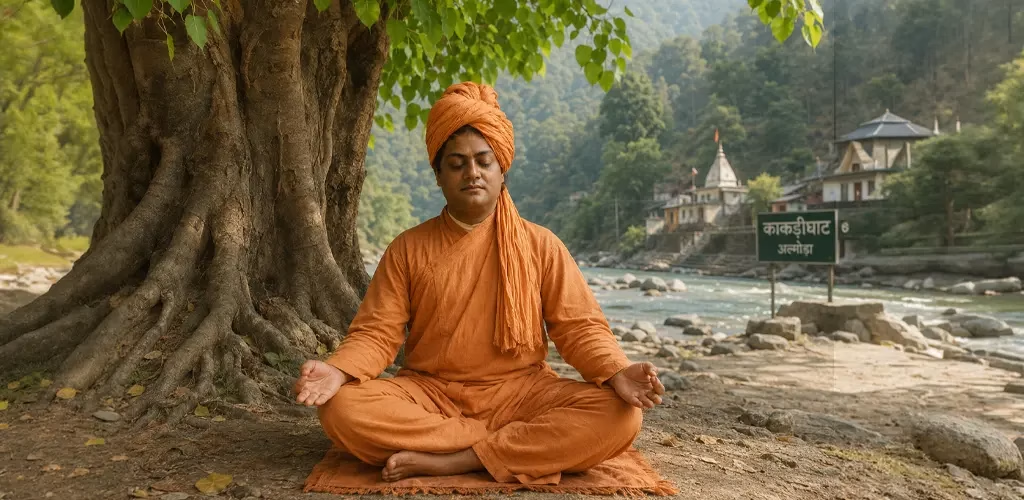
He began a long, tiring journey on foot, heading straight into the tall mountains of the Himalayas. After days of walking through the rough paths of Uttarakhand, his body finally gave out. Completely tired and starving, he collapsed under a large Peepal tree near a river in a tiny place called Kakrighat. He closed his eyes, thinking this might be the end.
But right there, in that deep silence, everything suddenly became clear. He experienced a powerful realisation that the human mind and the giant universe are completely one.
This single moment turned Narendra from a sad seeker into a confident master.
The Birth of Swami Vivekananda: Leaving Narendranath Behind
How does an ordinary man let go of his past, his family name, and his old identity to become a beacon for the entire world?
After finding his inner peace in the mountains, the young man knew he could no longer go back to his old life as Narendra. He chose to let go of his past identity entirely and took the name Vivekananda, which means “the bliss of spiritual wisdom.” This was not just a change of name; it was a total inner transformation. He put on the simple saffron robes of a wandering monk, traded his personal worries for a global mission, and decided to dedicate his life to serving humanity.
With this brand new name and a fierce inner strength, he was ready to travel across the ocean, where his brilliant mind would soon shock the greatest scientists of the Western world.
When Vivekananda Met Nikola Tesla
What happens when the deep wisdom of the East sits down at a table with the wildest scientific mind of the West?
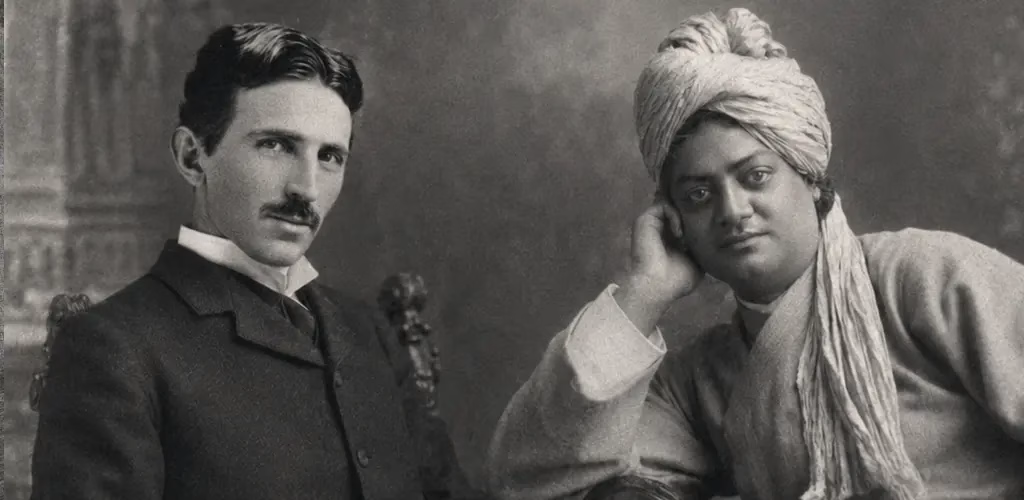
While travelling through America, Vivekananda did not just talk to religious leaders. In 1896, he went to a party and met the genius inventor Nikola Tesla. The two men instantly connected like old friends. Tesla was trying to understand how energy and matter work, while Vivekananda started explaining ancient Indian philosophy to him.
Tesla was absolutely shocked. He realised that these spiritual ideas perfectly matched the math equations he was working on in his private lab. Vivekananda proved that his ideas were decades ahead of his time. Yet, even while debating deep science with geniuses, he never lost his love for the simple, everyday things in life, even when those things got him into trouble with the law.
The Tea Battle of Vivekananda
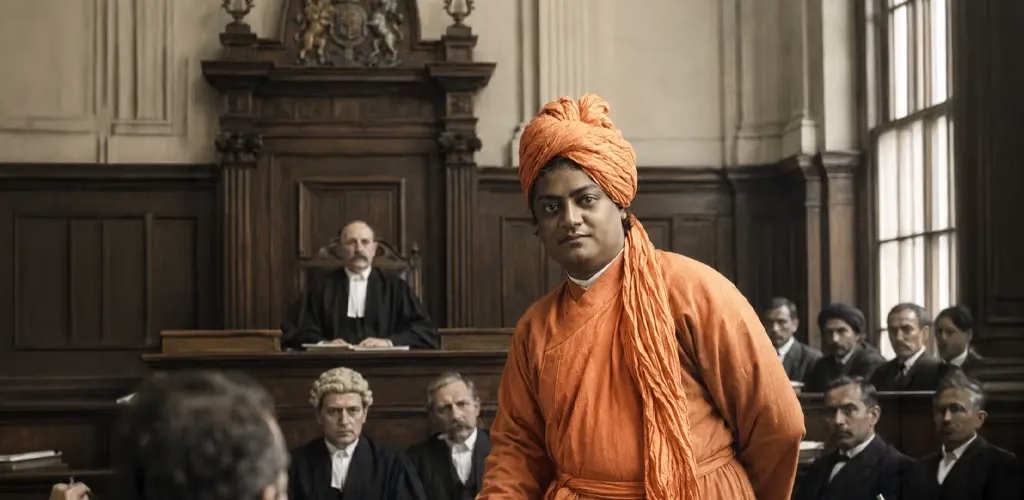
Imagine a holy monk standing in a formal courtroom, ready to fight a legal battle over a stack of tea leaves.
Many people do not know that Vivekananda absolutely loved tea. Back in the late 1800s, many strict religious teachers in India looked down on tea, calling it a bad habit. Vivekananda did not care. He loved the drink so much that he made all his students drink it at the monastery to help them stay awake during long hours of prayer.
The local town government saw this and tried to force the monastery to pay high shop taxes, claiming they were running a commercial cafe.
Vivekananda refused to back down. He took the government to court, fought the legal case himself, and won. He proved that being spiritual does not mean letting people take advantage of you, but while he was busy fighting this battle, his body was secretly running out of time.
The Final Prediction of Vivekananda
Would you panic if you knew the exact day your life would end, or would you sit down, close your eyes, and welcome it with a smile?
Throughout his 30s, Vivekananda’s body fought a massive battle with severe diabetes and asthma from years of non-stop travel. Despite the constant pain, he kept a calm smile and often joked to his disciples that he would never live to see 40. People thought he was just talking poetically, but he knew exactly what was coming.
On July 4, 1902, Swami Vivekananda woke up early at his monastery and spent his day teaching and talking with his friends just like any other day. In the evening, he went to his room, asked not to be disturbed, and sat down to meditate. Not long after, he passed away at just 39 years old, fulfilling the prediction he had often joked about.
An Extraordinary Life, Unintentionally Ignored
Swami Vivekananda lived an extraordinary life where people remember his unforgettable contributions to the society but his nuances, personal anecdotes, and love for little things in life hide behind an accomplished title.
But, as Narendranath Datta, he lived a life most people can relate to – the struggles, the challenges, the difficulties, and the heartbreaks. But despite all of that, he rose to the occasion, whenever needed and delivered a path that continues to inspire and lead generations. And that is what somehow sets him apart yet makes him feel like one of us.