Anini: India’s Most Remote Frontier Where Myths Still Breathe
In the Eastern Himalayas exists a destination that feels more like a forgotten world. Hidden near the India-Tibet border, Anini is one of India’s least populated district headquarters, where roads disappear into mist, and silence forms the daily life. What makes Anini truly fascinating is not just its isolation, but the way history, folklore, and nature merge into something almost mythical.
Where History Exists in Fragments
Unlike most places, Anini does not have a neatly documented past. Its history lives in fragments, passed through memory rather than written records. The region is home to the Idu Mishmi tribe, believed to have migrated from ancient Tibet thousands of years ago.
During World War II, Anini briefly entered global relevance as a remote supply point connected to routes like the Ledo Road. But once the war ended, it slipped back into obscurity. Even today, it remains one of the few district headquarters in India that has struggled with consistent road connectivity. Yet, this isolation has preserved something rare – a culture untouched by rapid modernisation.
A Land Where Spirits Walk With You
For the Idu Mishmi, nature is not scenery. It is alive.
Forests, rivers, and mountains are believed to be inhabited by spirits, and maintaining harmony with them is essential. This relationship is guided by shamans known as Igu, who perform long, complex rituals that can last for days.
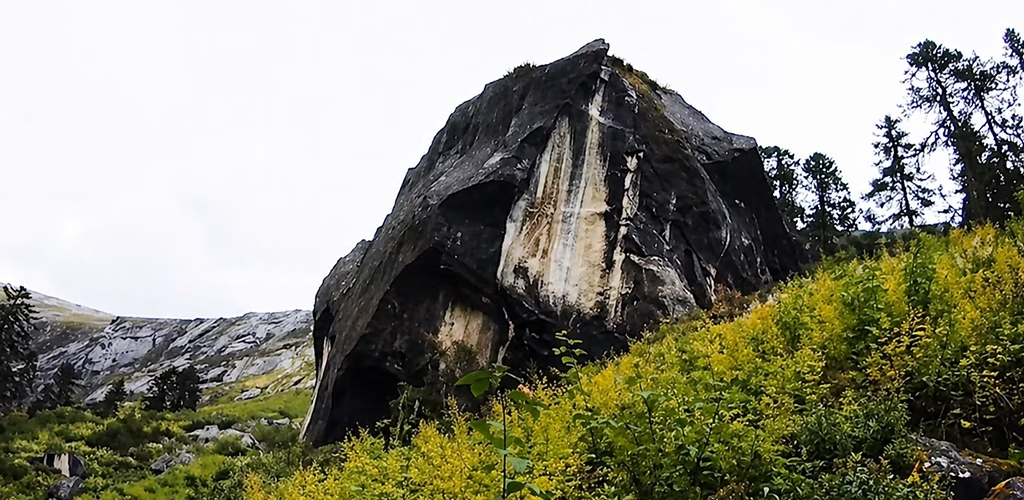
One of the most haunting beliefs is tied to Athu-Popu, a sacred site where souls are said to rest after death.
At Athu-Popu, a large stone is believed to carry the palm marks and tears of a priest who mourned his mother there. Nearby lies a wild paddy field, said to be cultivated by souls on their journey to the afterlife. It is places like this that blur the line between belief and landscape.
Tigers as Brothers, Not Predators
Perhaps one of the most striking aspects of Idu Mishmi culture is its relationship with wildlife. Tigers are not feared as enemies but respected as spiritual kin, often called blood brothers.
This belief has shaped hunting practices and taboos, helping preserve one of the richest ecosystems in the Eastern Himalayas. The forests around Anini remain largely untouched, not because of conservation laws alone, but because of deeply rooted cultural respect.
Valleys That Feel Like Another World
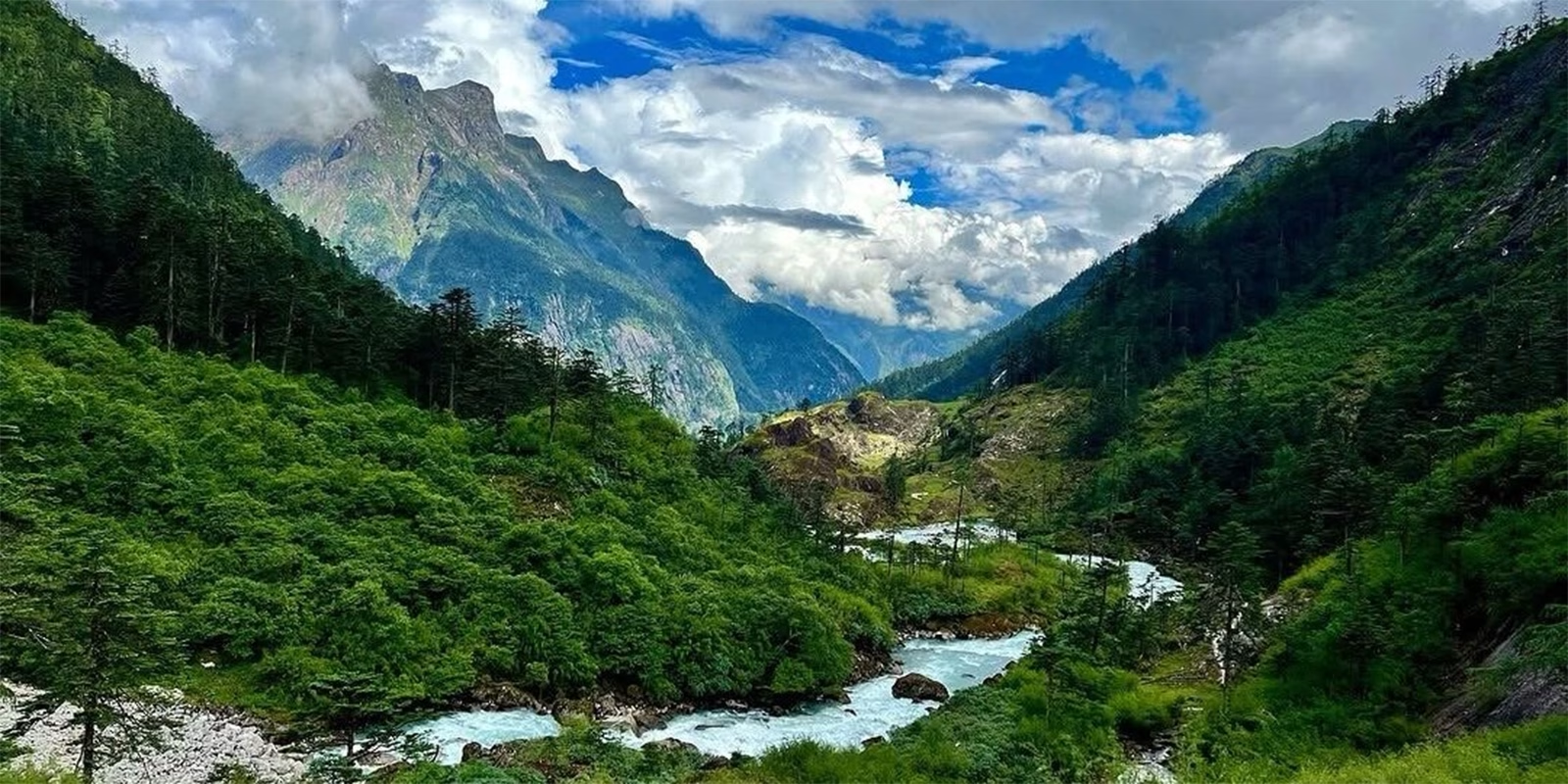
Step outside Anini, and the landscape becomes even more surreal. The Dri Valley, often called the Valley of Waterfalls, is a place where mist hangs low, and rivers roar beneath fragile hanging bridges.
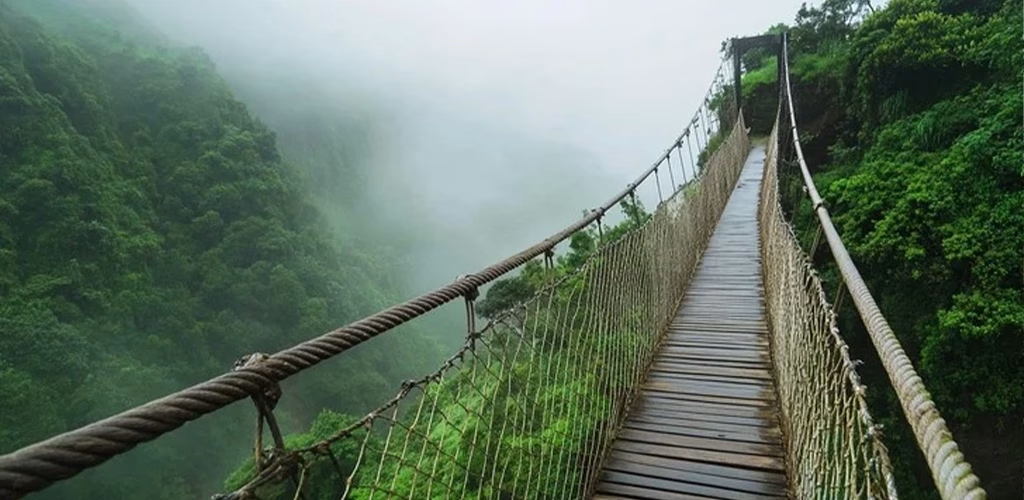
Crossing these bridges is not just travel; it feels like stepping into another dimension. Villages remain scattered, often accessible only on foot, where visitors stay in local homes, gather around a central hearth, and listen to stories that have never been written down.
Further into the wilderness lies the Seven Lakes Trek, a demanding journey into alpine terrain where pristine lakes sit untouched, known mostly to local hunters until very recently.
A Culture on the Edge of Disappearance
Despite its beauty, Anini stands at a fragile crossroads.
The number of Igu shamans is declining. Oral traditions risk fading as younger generations move away. Climate change is altering snowfall patterns and ecosystems. And yet, the community continues to hold on to its identity through festivals like Reh, rituals, and everyday practices.
What makes Anini special is not just what it has, but what it is at risk of losing.
Here’s Why Anini is Unforgettable
Anini is not a place you simply visit. It is a place that stays with you.
Maybe it is the silence of its valleys, the weight of its stories, or the feeling that you are standing somewhere time has almost forgotten. In a world that is constantly rushing forward, Anini exists quietly, holding onto something ancient, something intangible.
And perhaps that is its greatest mystery.